
Guides
Decorative Wall Mirror Ideas for Every Room

The best decorative wall mirror ideas begin with a room problem. Do you need more light, a strong focal point, or a small work of art above a console? I’m Anahita, founder of Pilardi, and I use that question before choosing any mirror. These steps will help you pick the right shape, scale, craft, placement, and care plan for each room.
Step 1: Decide What the Mirror Should Do in the Room
Good decorative wall mirror ideas start with one clear job. A mirror can reflect daylight, frame a view, fill a narrow wall, or give a quiet corner more presence.
Stand in the room at different times of day. Look at the wall from the doorway first. Then sit in the main chair or move through the hall. Note what the mirror would reflect. A beautiful mirror can still feel wrong if it faces a blank wall, a cluttered shelf, or a harsh light.
For an entryway
Choose a mirror that helps you pause before leaving. A small hand-painted mirror above a console works well when the wall is narrow. Leave room below it for one useful object, such as a bowl or tray. Keep the surface calm. The mirror should be easy to see as you enter.
For a living room
Use the mirror as a visual anchor. Place it above a console, beside a bookcase, or on a wall opposite a window. If the room already has bold art, choose a smaller mirror with a clear frame pattern. If the wall feels bare, a larger piece can carry more weight.
For a bedroom or dressing area
Think about light first. A mirror near a window can help with dressing, but direct sun may make some finishes harder to protect. A compact piece above a dressing table gives the area a clear purpose without making the room feel busy.
At Pilardi, I look for this link between use and craft. Our hand-painted decorative mirror collection is made for people who want function beside documented handwork. Every piece is one-of-one, handcrafted by artisans in Isfahan, then curated and shipped from Paris.
Step 2: Choose the Right Shape, Orientation, and Scale
Shape changes the mood of decorative wall mirror ideas. Orientation changes how the eye moves through the room. Scale decides if the mirror feels placed or lost.
Start with the wall width. Measure the space where the mirror will sit, then mark the outline with painter’s tape. Live with that outline for a day. This simple test shows more than a product photo can.
Match the shape to the wall
- Vertical mirrors: Use them in halls, beside doors, or above slim furniture. They draw the eye upward and suit narrow walls.
- Horizontal mirrors: Place them above a long console or sideboard. They help a wide wall feel tied to the furniture below.
- Small oval or compact shapes: Use them in a reading nook, powder room, or dressing corner where a large mirror would crowd the wall.
- Decorative framed forms: Choose these when the border matters as much as the reflection.
For furniture, a useful starting point is to keep the mirror narrower than the piece below it. The exact balance depends on the frame and the wall. A thick, richly worked border needs more breathing room than a plain edge.
One Pilardi example is the Hand-painted Tazhib Mirror in black and gold, which measures 40 by 34 centimeters. Its compact format suits a console, study wall, or layered salon display. The scale lets the painted detail stay close enough to inspect.
Use more than one mirror with care
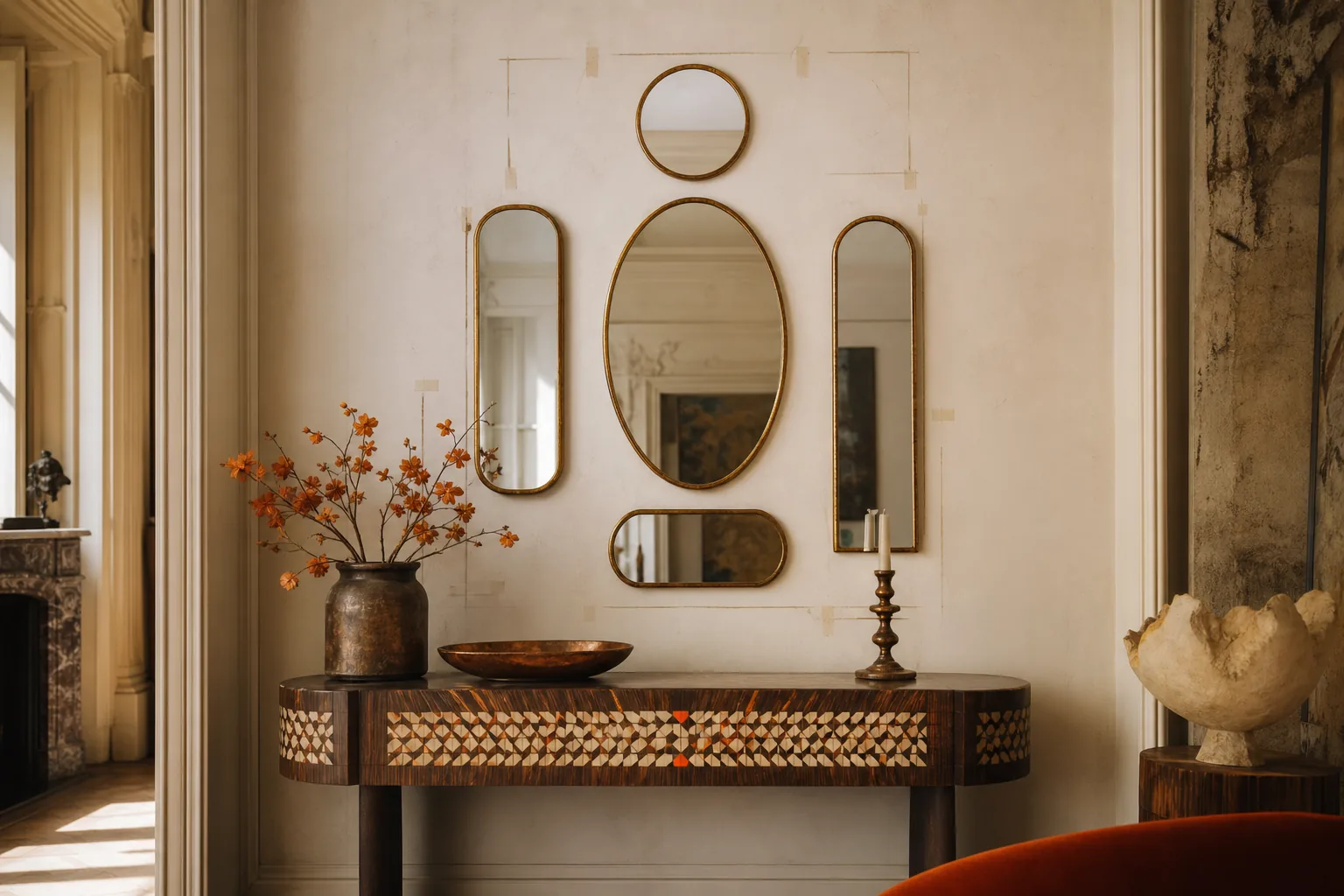
A pair can work beside a fireplace or across a wide wall. Keep the gap deliberate. Identical spacing looks formal. A small difference in height can feel more relaxed, but only if the frames share one visual link.
Don’t force a gallery wall when one mirror already has enough detail. Collectible pieces need air around them.
Step 3: Match the Mirror’s Craft and Palette to Your Interior
The strongest decorative wall mirror ideas connect the frame to something already in the room. That link might be a color, a line, or a material. It doesn’t need to be an exact match.
First, study the room’s quiet colors. Look at the wood tone, metal finish, wall paint, and nearby textiles. Then choose one detail from the mirror that can repeat once elsewhere. A turquoise mark might echo a cushion. A dark wood frame might sit near a walnut table. Stop there. Too many repeated accents make the room feel planned to death.
Read the craft before styling it
A hand-painted Persian mirror asks to be viewed at close range. Give it a wall where guests can approach it. In a salon, that may be above a console. In a study, it may sit behind a writing desk. In an entry, it can greet the eye before the rest of the room does.
Persian art includes many forms and periods, so avoid treating every painted mirror as the same kind of object. The broad reference point is useful in Wikipedia’s overview of Persian art, but a product description should still state what is known about the individual piece.
That is why provenance matters to me at Pilardi. The mirrors are handcrafted by artisans in Isfahan. Each one is unique, with its own size and painted surface. The pieces are curated and shipped from Paris, and they need careful handling because their finish is part of the object.
Build a restrained palette
- Pair indigo with warm wood or soft cream.
- Use red as a small note against a quiet wall.
- Let turquoise sit beside brass, sand, or natural linen.
- Use black and gold where the room already has dark lines.
These choices work because they give the eye a path. The mirror remains distinct, but it doesn’t look dropped into the room.
Step 4: Plan the Placement and Build a Thoughtful Arrangement
Placement turns decorative wall mirror ideas into a room plan. A mirror needs a visual relationship with the objects around it, not a random empty patch of wall.
Begin at eye level. Mark the center of the mirror on the wall with a small piece of low-tack tape. Ask someone to hold a paper cutout at that point while you view it from the doorway and from the main seat. Check the reflection before you drill.
Try these room-by-room arrangements
Entryway: Center a compact mirror over a narrow console. Leave enough space for the door to open without striking the frame. A small tray below can repeat a color from the painted border without competing with it.
Living room: Place one larger mirror above a console, or use two related pieces on either side of a fireplace. Keep nearby art lower in contrast if the mirror has birds, flowers, or a painted scene.
Dining room: A mirror can reflect candlelight or a view across the table. Test the sight line while seated. You don’t want diners staring at their own reflection through the meal.
Stair landing: A vertical format can fill a tall wall. Measure the landing twice. Moving furniture on stairs is hard, so decide the route before the mirror arrives.
Home office: Put a small mirror on a side wall rather than directly behind your screen. It can add depth without sending movement into your line of sight during work.
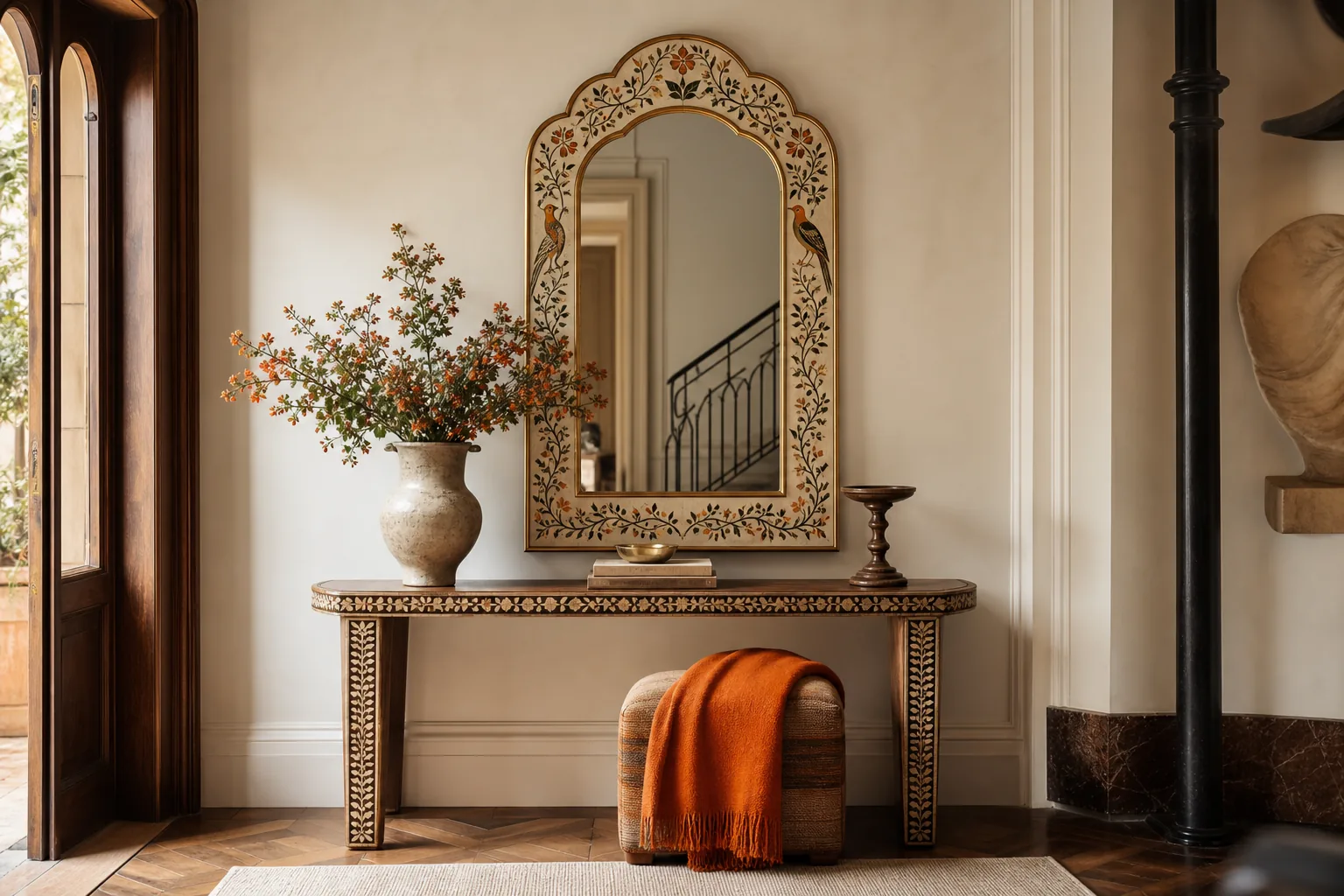
When adding a second wall object, compare its visual weight rather than its size. A small mirror with a detailed frame may balance a larger plain artwork. A large ornate frame may need to stand alone.
For more guidance on using mirrors near light and consoles, Pilardi’s note on styling Persian decor with intention follows the same rule: place each object where its form can be seen.
Step 5: Install, Light, and Care for the Finished Display
The last stage protects the mirror and keeps your decorative wall mirror ideas safe. A good plan includes the wall, the hanging point, the light, and the cleaning method.
Check the wall and hanging point
Find the wall studs where possible. If the mirror must sit between studs, choose fixings rated for the mirror’s weight and wall type. Read the maker’s hanging guidance before you start. Heavy or unusual frames may need two fixing points to stop twisting.
Hold the mirror in place with help. Don’t lift a framed piece by a delicate ornament or painted edge. Once it hangs, check that the frame sits flat and doesn’t rock when the wall is lightly touched.
Use light with restraint
Place a mirror near soft daylight when you want the room to feel open. Avoid a direct beam that creates glare. At night, a lamp placed to one side can bring out frame texture without shining straight into the glass.
Mirrors reflect whatever sits opposite them. Move a lamp, plant, or artwork until the reflection feels useful. If the reflection shows clutter, the mirror will repeat that clutter.
Clean the glass without harming the frame
Use a soft, dry cloth for dust. If the glass needs more care, apply a small amount of cleaner to the cloth, not around the frame. Keep liquid away from painted, wooden, or textile surfaces.
Do not scrub decorative relief or try to polish a painted border. The finish may be hand-worked, and its slight variations are part of the piece. For collectible mirrors, careful handling is a better habit than frequent cleaning.
The basic function of a mirror is reflection, but the frame changes how that reflection behaves in a room. Keep both parts in mind when you choose the light and the cleaning method.
FAQ
Where should I place a decorative wall mirror?
Place a decorative wall mirror where it reflects useful light, a pleasing view, or a well-kept part of the room. Entryways, console walls, dining rooms, and side walls in living rooms often work well. Test the reflection from the main doorway and seat before fixing the mirror in place.
What shape of mirror makes a room look taller?
A vertical mirror usually makes a wall feel taller because its long line draws the eye upward. It works well on a narrow wall or beside a door. The frame still matters, so leave enough space around ornate borders and avoid squeezing a tall mirror between bulky furniture.
How big should a wall mirror be over a console?
A wall mirror over a console should usually sit within the console’s visual width, with space at both sides. Use painter’s tape to mark the proposed size first. A detailed handcrafted frame may need more breathing room than a plain frame, even when both mirrors share similar measurements.
Are hand-painted Persian mirrors good for modern interiors?
Hand-painted Persian mirrors can work well in modern interiors when the room has enough quiet space around them. Choose one color from the mirror to repeat once in a textile or small object. Keep nearby art simple if the frame includes floral motifs, birds, or a painted scene.
How do you care for a decorative framed mirror?
Dust the glass and frame with a soft cloth, then keep liquid away from painted or wooden edges. Spray cleaner onto the cloth rather than onto the mirror. Avoid hard scrubbing, strong heat, and direct glare. For a one-of-one piece, careful handling matters more than frequent polishing.
Conclusion
Choose the mirror by its job first, then check its scale, craft, reflection, and fixing point. For readers who value documented handwork, I’d start with a one-of-one Pilardi mirror from Isfahan and plan the wall around it. Mark the shape with tape today, then compare the reflection at morning and evening light before you commit.


