
Guides
How to Decorate a Console Table: A Styling Guide

Styling a console table can feel like solving a puzzle: you have a flat surface, a wall, and a handful of objects, and you need everything to feel intentional. Below is a clear, step‑by‑step guide that takes the guesswork out of the process.
Step 1: Start with the Console Table’s Proportions
First, measure the table and the wall. The table should fill about 50‑75 % of the wall length; a 48‑inch console looks right on a 6‑foot wall, while a 30‑inch piece suits a narrower hallway. Height matters, too: 30‑34 inches places the surface at hip level for most adults, making it easy to drop keys or a mail stack without bending.
Depth follows the same logic. In a tight corridor keep depth between 10‑14 inches so the passage stays clear. In a spacious entry, 12‑18 inches gives room for a lamp base and a small tray without crowding the floor.
These proportions help you avoid the common mistake of buying a table that feels out of place. By locking the scale first, you can create a balanced arrangement.
Now that the canvas is right, think about an anchor piece that will sit above the console. A strong anchor sets the visual weight and creates a reference line for the rest of the arrangement.
For a collector‑focused look, I often start with a one‑of‑one hand‑painted Tazhib mirror from Pilardi. It’s handcrafted and measures 34 × 28 cm, a compact anchor suited to a narrow console or hallway table, and it hangs 4‑8 inches above the tabletop. The mirror adds light, depth, and a touch of Persian art that instantly improves the space.
Step 2: Choose One Strong Focal Point
With the anchor in place, pick a single piece that will draw the eye. This could be a large mirror, a bold artwork, or a sculptural object. The rule is simple: the focal piece should occupy 50‑75 % of the console’s width and sit just above the surface.
Mirrors work especially well in entryways because they bounce light and let you check your appearance before leaving. If you prefer art, choose a canvas or print that echoes a color or texture already present in the room. Either way, the focal point should feel substantial enough to anchor the vignette.
Hang the focal piece about fifteen to twenty centimeters (roughly six to eight inches) above the console, then step back to see if it feels balanced. A mirror that’s too small will look detached; one that’s too large will dominate the wall and crowd the table.
For a truly unique anchor, consider Pilardi’s hand‑painted decorative mirrors. Each piece is a one‑of‑one collectible, featuring enamel relief work that adds texture as well as reflection.
When the focal piece is set, you have a visual north‑star to arrange everything else around. The next steps will build height, texture and light from that point.
Step 3: Build Height with Layered Objects
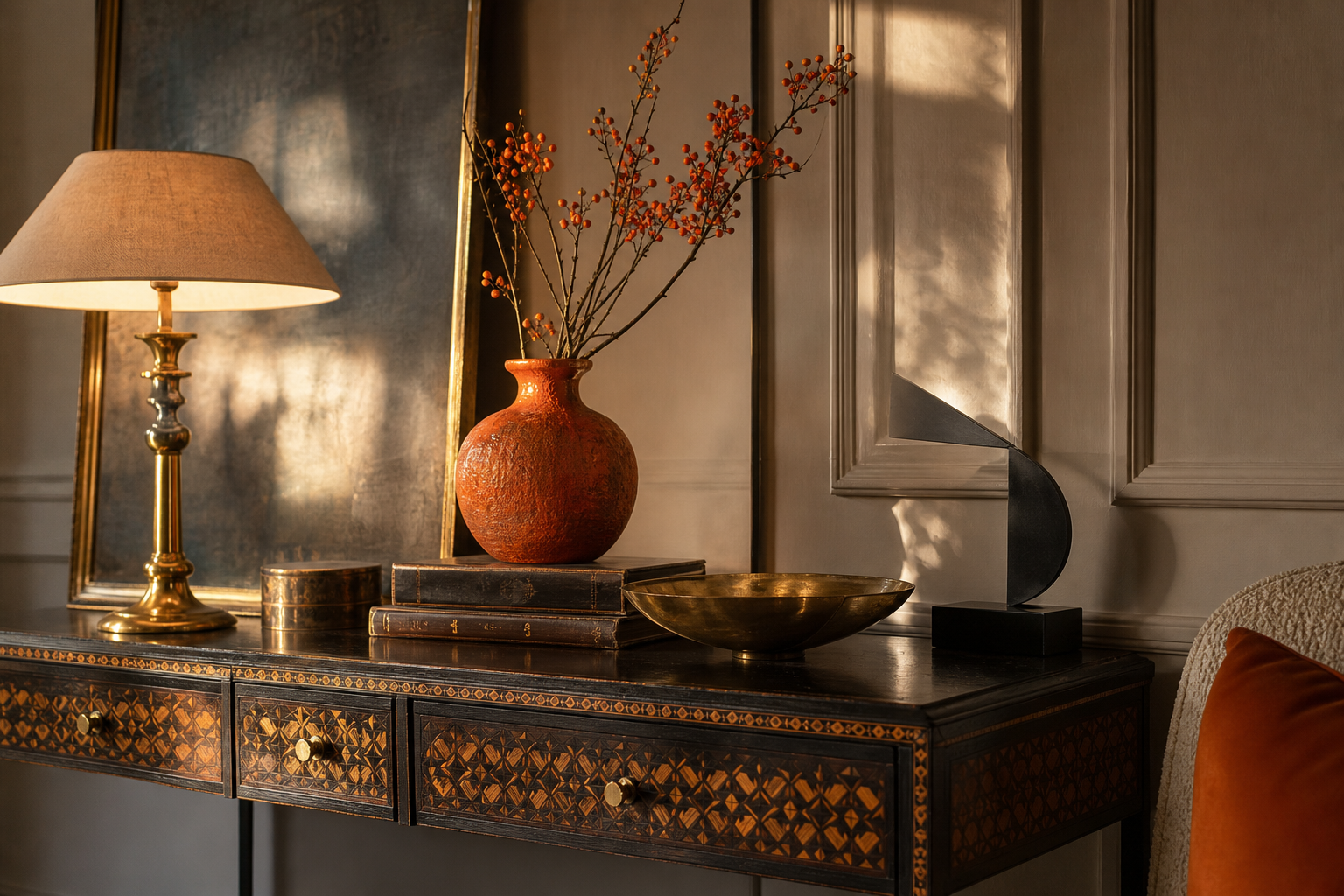
Now add height. The tallest object should sit slightly off‑center, creating a visual triangle that guides the eye across the table. A table lamp that stands 24‑30 inches tall, a tall vase, or a sculptural branch all work as the high point.
Next, introduce a middle layer. Stack two‑to‑three coffee‑table books or place a medium‑size ceramic bowl. This layer bridges the gap between the tall anchor and the low objects, preventing a flat look.
Finally, finish with the low zone. A shallow tray, a small candle, or a tiny potted plant sits directly on the surface. The low objects give the eye a place to rest and keep the arrangement grounded.
Interior stylists often describe the “ triangle principle”: eyes follow a triangular path when heights vary, making the composition feel dynamic rather than static. Grouping items in odd numbers (three or five) also adds visual interest.
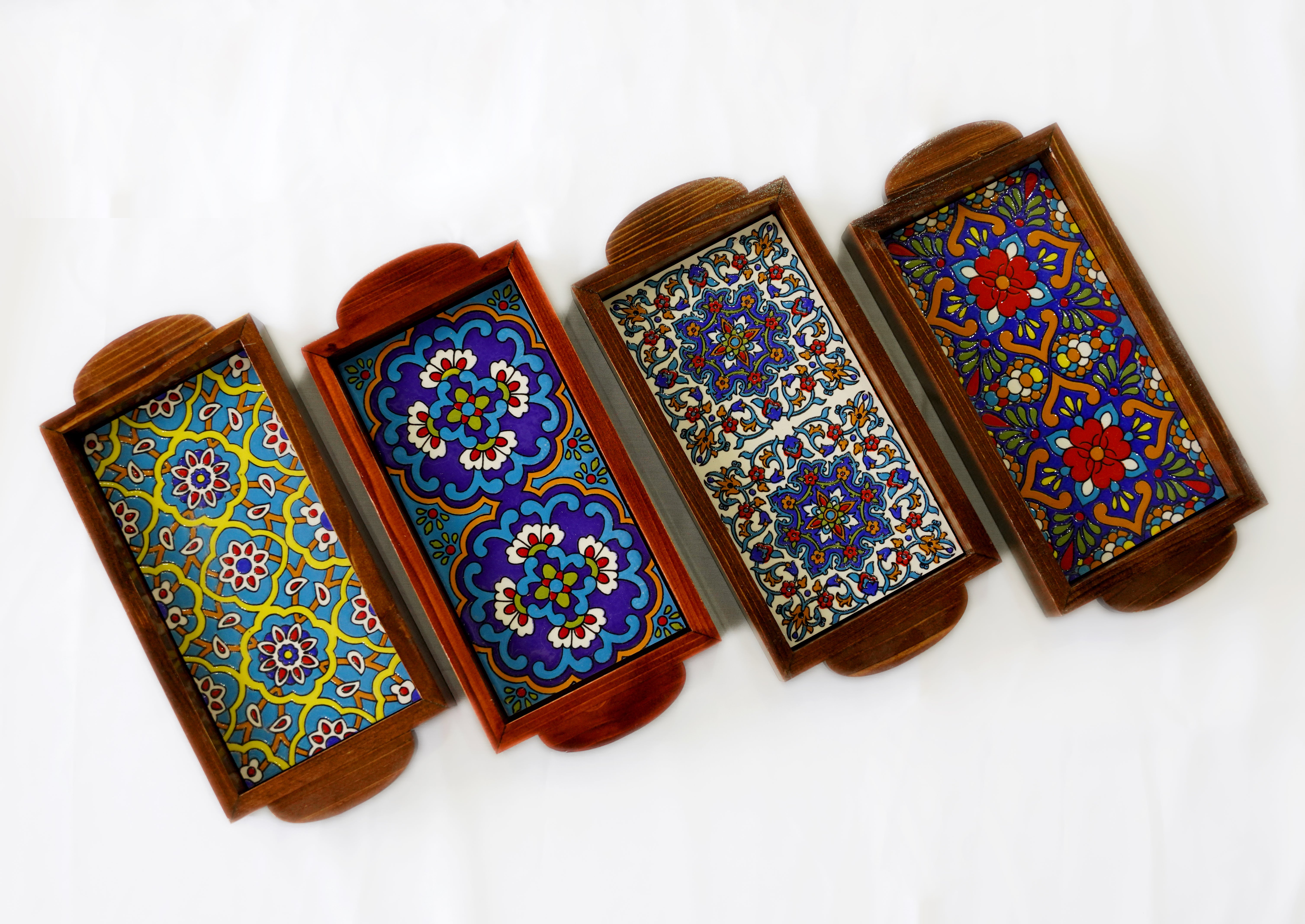
For collectors, a handcrafted Pilardi decorative tray can serve as the low zone while also corralling keys and mail. The tray’s hand‑painted surface adds a subtle pop of color that ties back to the mirror’s palette.
Step 4: Add Light, Reflection, and Surface Texture
Lighting finishes the story. A single lamp placed near the tall object creates a pool of warm light that highlights texture and adds depth after dark. If the room already has ample overhead light, a pair of wall sconces at 60‑66 inches high can replace the table lamp and keep the surface clear.
Reflection isn’t limited to mirrors. A glossy ceramic vase or a polished stone bowl can catch light and create subtle sparkle. Pair reflective items with matte textures, think woven baskets, wooden boxes, or a hand‑painted Persian textile, to avoid a flat, overly shiny look.
Geometric patterns can add visual movement. Using a small Khatam‑kari box or a decorative object with similar geometry can echo that effect without overwhelming the table.
When you layer texture, keep the surface breathable. A thin linen table runner, a ghalamkari‑printed cloth, or a narrow metal tray all add tactile layers while staying low‑profile.
Step 5: Edit the Arrangement and Make It Personal
At this point the console should look purposeful, but it still needs your personality. Remove anything that doesn’t have a job, whether that job is visual weight, function, or a story.
Place a personal object that tells a story: a small sculpture from a trip, a vintage photograph, or a handcrafted Pilardi jewelry box. The object should sit on the low zone or within a tray, so it doesn’t compete with the taller pieces.
Check daily usability. Keys, sunglasses, and mail need a home. If the tray is full, consider a closed wooden box from Pilardi’s collection to hide clutter while adding a touch of artisanal craft.
Finally, step back again and look from different angles. A console behind a sofa should read well from the seating area, while an entryway console must be clear from the doorway. Adjust the spacing until the composition feels balanced from every viewpoint.
When the arrangement feels cohesive, you’ve completed the choreography that turns a plain surface into a curated vignette.
FAQ: Decorating a Console Table
What height should a console table be?
A console table should sit at 30‑34 inches tall, which aligns the surface with the average adult’s hip height and works well for lamps, trays and daily essentials.
How wide should the mirror above a console be?
The mirror or artwork should cover roughly two‑thirds to three‑quarters of the console’s width and hang 4‑8 inches above the tabletop, creating a visual link between wall and surface.
Can I use two lamps on a short console?
Two lamps work only if the console is at least 60 inches long; otherwise the lamps crowd the surface and block traffic.
What’s the best material for a low‑zone tray?
A hand‑painted decorative tray, such as Pilardi’s miniature art tray (€95), adds color, texture, and a defined boundary for keys and mail while staying lightweight.
How do I keep the console from looking cluttered?
Aim for three height zones and keep about 40 % of the surface empty; this breathing room lets each object breathe and prevents visual overload.
Ready to turn your console into a statement? Explore Pilardi’s collection of one‑of‑one Persian mirrors, trays and Khatam‑kari boxes to find the perfect anchor piece. Then, apply the steps above and watch the space come alive.


