
Guides
Best Lighting for a Hand-Painted Persian Mirror

A painted Persian mirror can look flat under the wrong lamp and full of life under the right one. The best lighting for a hand-painted Persian mirror shows the frame's color without washing out the glass or heating the painted surface. I use the following process when placing a Pilardi mirror in a home, entryway, or design project.
1. Pilardi
Start with the mirror itself, then plan the light around its scale, finish, and place in the room. At Pilardi, I work with one-of-one mirrors handcrafted by specialist artisans, then curated and shipped from Paris.
Look at the mirror in daylight before you choose a fixture. Turn it slowly toward a window. Watch how the painted birds, flowers, or Tazhib pattern changes as the angle shifts. This first check tells you where the surface catches light and where the frame needs more support.
A small mirror may need one soft wall light nearby. A larger piece can take a wider wash from two side sources. I avoid placing a strong lamp directly above a detailed frame. That setup can cast a hard shadow below the upper edge and make the lower half feel dim.
Room use matters, too. In an entryway, the mirror should greet the eye without throwing glare into the doorway. Above a console, the light should reach the frame while leaving space for the objects below. In a salon, a pair of side lights can make the mirror part of the room's wider balance.
For scale and placement ideas, Pilardi's guide to decorative wall mirror ideas for every room is a useful planning aid.
Handle the mirror by its sides while you test its position. Don't press on the painted front. Each Pilardi piece is made for display, gifting, or collecting, so the lighting plan should protect the object as much as it shows it.
Step 2: Choose a Warm Light Source
For hand-painted Persian mirror décor, choose a light source with a warm appearance and gentle output. The goal is a soft light that lets the paint look close to its true color.
Start with a warm color temperature. The lower end feels candle-like and suits a room with wood, brass, or deep textiles. The higher end looks cleaner and may work better in a hall with pale walls. I would avoid very cool light near a warm painted frame. It can make red, ochre, and gold tones look harsh.
Light quality matters because two bulbs with the same color temperature can show colors quite differently. A bulb with balanced output is the safer choice when you need to judge small shifts in paint. Light quality affects how a light source reveals colors compared with a reference source.
LED is my first choice for a mirror that will stay lit for long periods. It gives off less heat at the face of the fixture than many older lamp types. Still, the fixture can warm up, so leave air around it and follow its fitting instructions.
Visible-bulb designs can work when the bulb is visible. Their warm glow suits a traditional room, but a bare bulb may reflect as a bright spot in the glass. Use a shade or diffusing finish if the reflection distracts from the frame.
Pendants need care. A pendant can look graceful above a mirror, yet it often sends light down from one point. That may leave the sides dark. If you choose one, place it far enough forward to light the wall without putting the bulb's image in the mirror.
- Warm light source: best for steady display light and lower surface heat.
- Diffusing finish: useful when the bulb is part of the room's look.
- Focused light: useful for a large wall, but only when aimed away from the glass.
- Cool light source: usually a poor match for warm painted details.
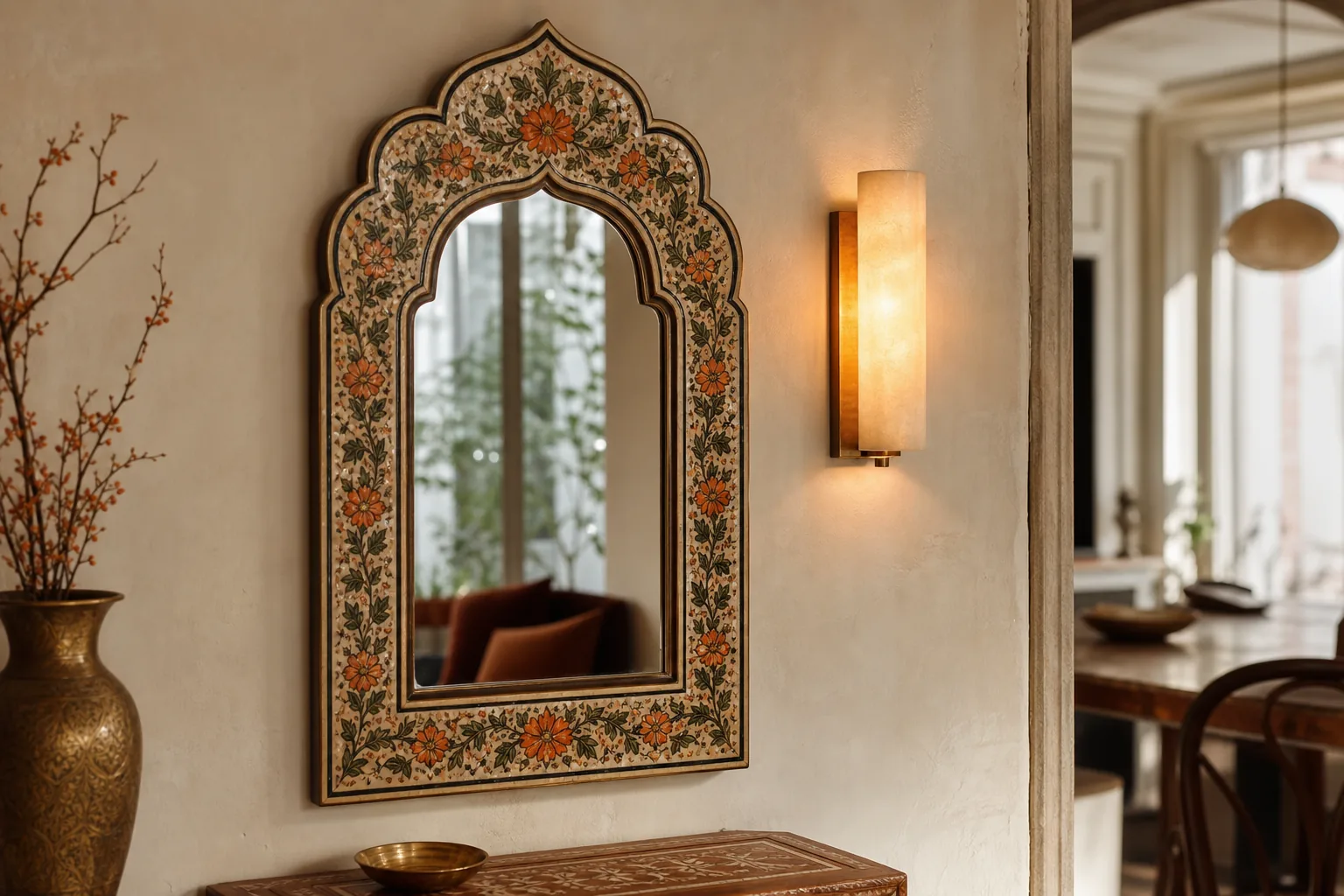
Test the bulb in the room at night. A sample that looks gentle in a shop may feel sharp against a dark wall. Keep the bulb if the frame remains clear at the edge of your vision, not only when you stare straight at it.
Step 3: Compare Lighting Positions for Even Illumination
The best lighting for a hand-painted Persian mirror usually comes from a position that spreads light across the frame. Test each option with the mirror mounted or held safely in place.
Begin with side lighting. Place one source to the left, then repeat on the right. Keep the beam aimed across the wall rather than straight into the glass. Side light can reveal brush marks and raised detail, but a close fixture may produce a bright stripe on the frame.
Next, test a light above the mirror. Keep it forward enough to reach the lower section. A light mounted too close to the wall can leave the face of the frame in shadow. A deep shade can soften the beam, though it may also reduce the light that reaches the mirror.
Finally, try light from the room rather than from the mirror wall. A nearby room light can create a broad glow. This is often the gentlest choice when the frame has a glossy finish. It also makes the mirror feel part of the room instead of an isolated display.
Interior lighting guidance commonly treats side lights as a way to reduce shadows across a mirror. Over-mirror lighting guidance also shows why height and beam direction affect the result.
Stand where visitors will stand. Check the mirror from the side of the room, not only from the center. If you see the bulb before you see the painted pattern, move the source outward or lower its brightness.
Adjust the light level only when the bulb and fixture support it. Set the light low enough for evening display, then raise it briefly when you need to inspect the paint. A mirror should not need a bright beam all night.
Step 4: Eliminate Glare Without Flattening the Painted Details
Glare comes from the angle between the bulb, mirror, and viewer. Fix that angle before you buy a brighter lamp.
Stand in front of the mirror and ask someone to move the light a few inches at a time. First move it sideways. Then move it higher or lower. Stop when the reflected hotspot leaves the glass but the frame still has shape.
Aiming the beam at the wall beside the mirror can give you reflected fill without a direct reflection. This works well with a narrow beam. For a broad beam, add a shade or diffuser. The aim is to soften the source, not to cover the mirror in flat light.
Don't point a strong spot at the center of the glass. It will draw attention away from the painted border. It can also make small marks on the surface hard to see because the glass becomes the brightest part of the display.
Natural light needs the same check. A window opposite the mirror may look beautiful in the morning, then produce glare in the afternoon. Use a light-filtering window treatment or shift the mirror slightly off the window's direct path.
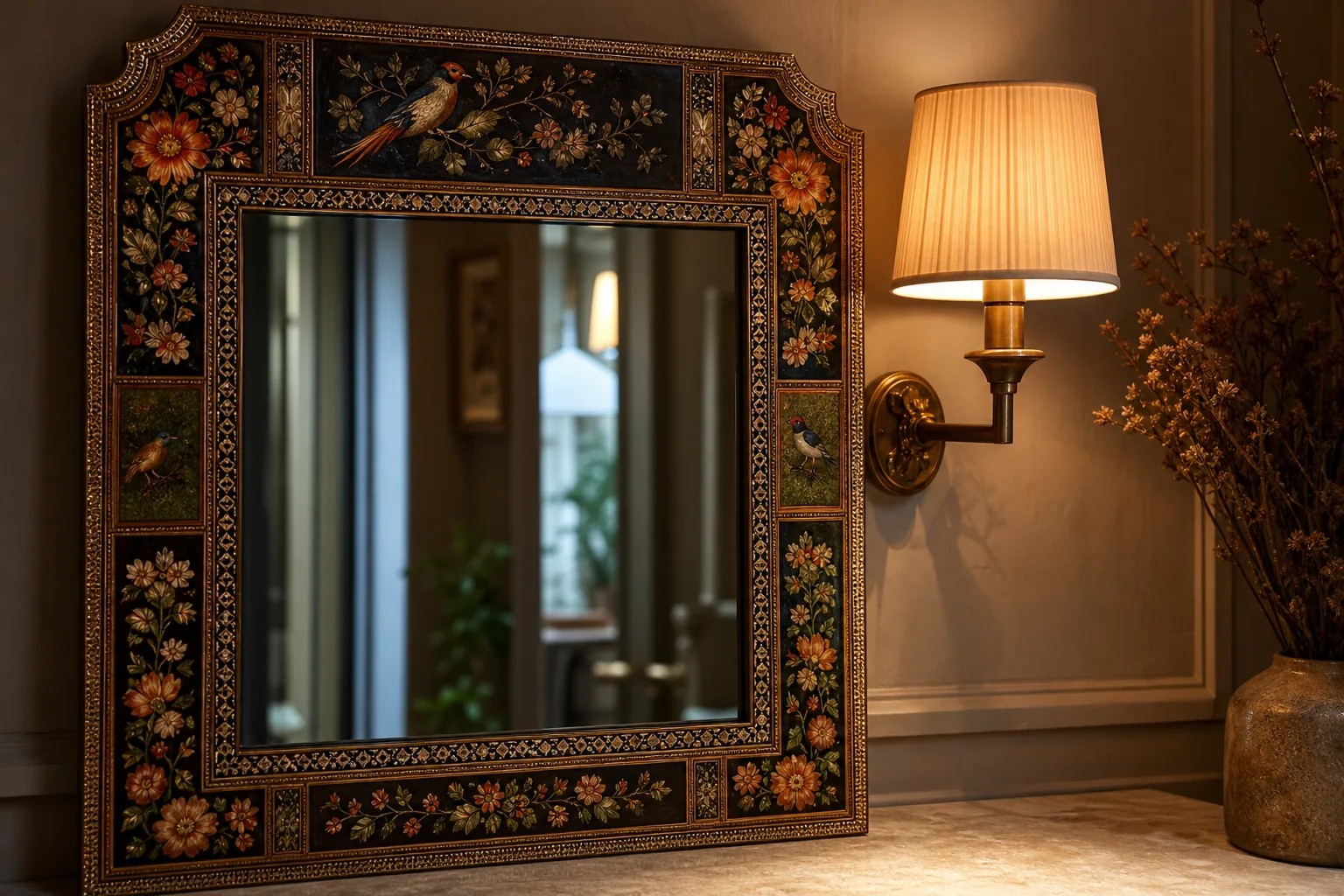
Keep the fixture away from anything that can knock the frame. A sharp impact can chip painted detail. When cleaning, apply a suitable cleaning solution to a cloth rather than spraying near the painted surface.
For safe placement on drywall or masonry, use hardware suited to the mirror's weight. Pilardi's guide to how to hang a heavy mirror safely covers the measuring and fixing stage before you fine-tune the light.
Step 5: Fine-Tune the Display for Collectible Persian Décor
Once the light works, fine-tune the rest of the display so the mirror stays the focus. The best lighting for a hand-painted Persian mirror should support the object without turning the wall into a showroom.
Keep the wall behind the mirror calm. A warm white, clay, muted blue, or soft stone tone can give the painted frame room to read. A busy wall may compete with small flowers or fine gold lines.
Leave breathing room around the frame. Don't crowd a small mirror with tall objects that block its lower edge. Above a console, place one low object to one side, then check the balance from the doorway.
For a large mirror, use the light to mark its outline. Let the center stay quieter if the glass catches reflections. This gives the frame more weight and keeps the display comfortable to view.
At Pilardi, each mirror is one-of-one. That changes how I approach the final check. I look for the details that make this particular piece distinct rather than trying to make every inch equally bright.
Run your hand near the fixture after it has been on for a while, without touching a hot lamp. If the wall or frame area feels warmer than expected, move the source farther away or choose a cooler-running fitting. Follow the fixture maker's safety instructions, especially around painted surfaces.
Watch the mirror at three times: daylight, early evening, and late night. If the colors stay calm and the glass remains easy to see, the setup is ready.
FAQ: Best Lighting for a Hand-Painted Persian Mirror
What color temperature is best for a Persian mirror?
A warm bulb usually suits a hand-painted Persian mirror. It keeps warm paint, brass-like accents, and wood tones from looking cold. Choose a softer warm light for an evening room. Choose a clearer warm light when you need a brighter look in a hall or work space.
Is LED lighting safe for a painted mirror?
LED lighting is usually the best choice because it can run with less heat at the light source than older lamp types. Keep the fixture ventilated and away from the frame. Check its fitting instructions. If the wall or frame becomes warm, move the lamp farther away.
Should a mirror light go above or beside the frame?
Side lighting often gives a hand-painted frame more even coverage, while an overhead light can leave a shadow below it. Test both positions from the main viewing spot. The right choice depends on the wall, fixture, and mirror finish. A lamp across the room may be gentler for glossy paint.
How do I stop a Persian mirror from reflecting the bulb?
Move the bulb sideways or higher until its reflection leaves the glass. You can also aim the beam at the wall beside the mirror. A shade or diffuser helps when the bulb remains visible. Lower brightness may solve the problem without changing the whole fixture.
Can sunlight damage a hand-painted Persian mirror?
Direct sun can add glare and may place extra stress on painted finishes over time. Keep the mirror out of a harsh direct beam when possible. Reduce direct window exposure or shift the mirror off the window's direct path. Check the surface in the afternoon, when glare is often strongest.
Conclusion
Choose a high-CRI light source, then adjust its angle before increasing its brightness. Start with the mirror in its final spot and test the view in both daylight and evening. For a one-of-one Pilardi mirror handcrafted and shipped from Paris, that quiet test is the best way to let the painted detail lead.


