
Guides
How to Style a Coffee Table Tray Beautifully

Only a handful of objects sit on a coffee table, yet they set the tone for the whole room. If the tray looks chosen, the rest of the décor falls into place. Below is a step‑by‑step guide that takes you from an empty surface to a curated vignette you can lift and reset in seconds.
Step 1: Choose the Tray and Define Its Role
Start with the tray itself. Its shape should either echo or contrast the table’s geometry. A rectangular tray on a rectangular table creates a clean border; a round tray on a square table adds visual tension, a trick designers use to draw the eye according to interior‑styling experts. Size matters, too: aim for roughly one‑third to one‑half of the table’s surface. That translates to a length about two‑thirds of the table’s length, a rule that keeps the tray from looking like an after‑thought.
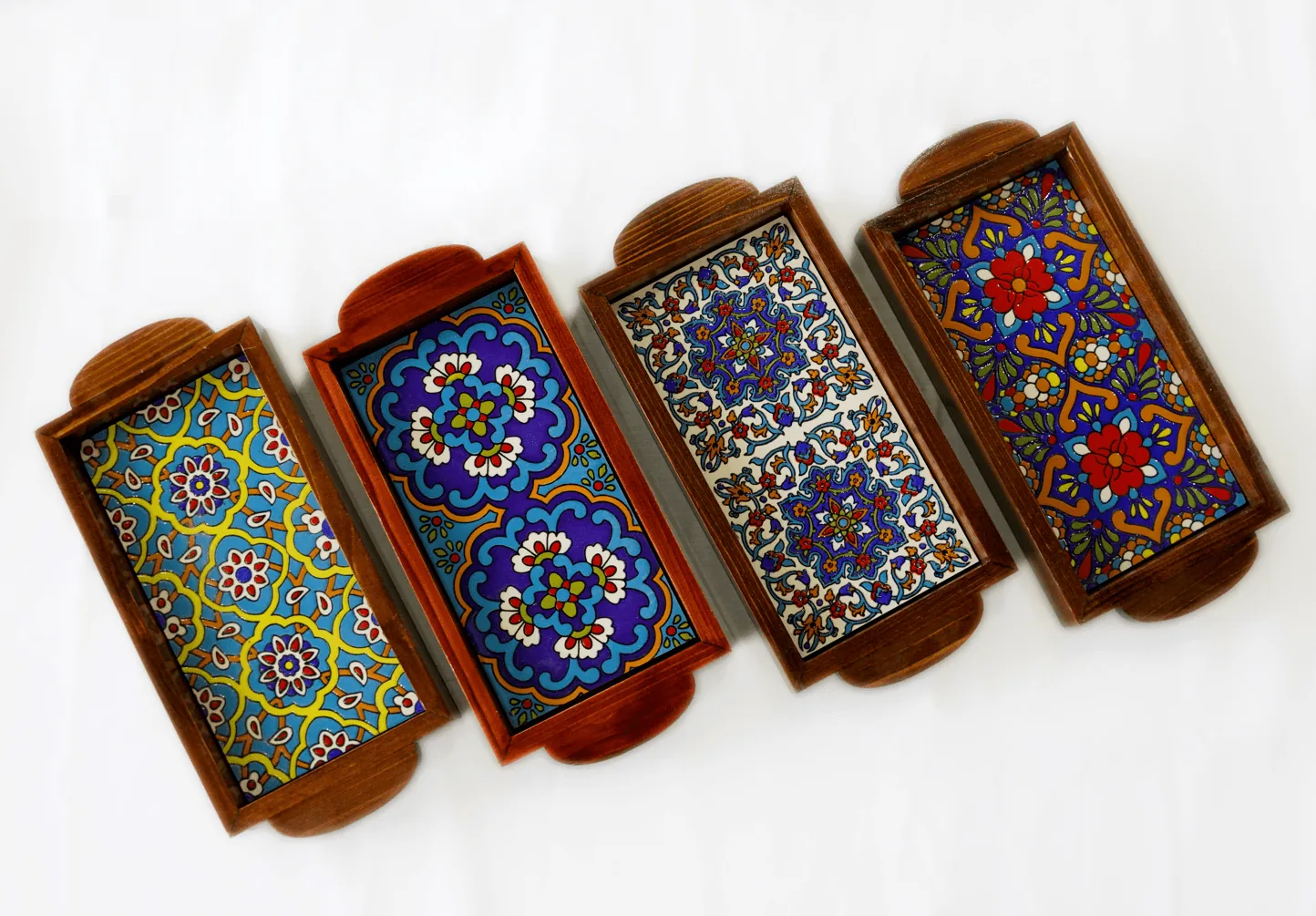
The material should differ from the table. Wood pairs well with glass or marble; metal adds a cool note to a warm wood table. When you pick a tray that contrasts, the whole arrangement reads as collected rather than catalog‑ordered. Pilardi’s Persian trays and home accents are hand‑painted in wood and ceramic, so they stand apart from a glass, marble or lacquered tabletop see the selection here. Bottom line: choose a tray that feels intentional, sized right, and made of a material that doesn’t blend into the table.
Step 2: Start with One Focal Object
The tray needs a hero piece to anchor the scene. Pick a tall, eye‑catching object and place it slightly off‑center. A hand‑painted decorative tray from Pilardi, with its intricate miniature art, can serve as that focal point while also acting as the tray itself. Its unique geometry and colour make it instantly recognizable, and because it’s a one‑of‑one piece, it adds collectibility to the display.
Once the hero is set, the rest of the arrangement builds outward. A single sculptural vase, a stack of vintage‑style books, or a small bronze box can sit beside the hero, creating a triangle that guides the eye from high to low. The hero should sit toward the back of the tray if you view the table from the sofa, giving the composition depth.
Step 3: Add Height, Texture, and Organic Shape
Layering creates rhythm. Place a tall vase or candle behind the hero, a medium‑height book stack in front, and a low bowl at the front edge. Vary the finishes, smooth glass next to rough wood, to keep the eye moving. Designers call this the “visual triangle” and it works because each level tells a different part of the story.
Texture matters as much as height. A woven coaster, a glazed ceramic bowl, and a brushed‑metal candle holder each bring a tactile cue that invites touch. When you mix organic shapes (a round bowl) with geometric ones (a square box), you add a subtle surprise that feels curated.
This principle applies whether your table is marble, wood, or glass.
Step 4: Layer Useful Objects Without Losing Negative Space
Function and beauty can share a tray. A small ceramic bowl can hold coasters; a sleek metal box can hide remote controls. Keep the number of items low, three to five works for most trays, and always leave a gap of at least a few centimeters around the edges. That breathing room signals confidence and lets daily items like mugs sit comfortably.
When you add a candle, choose a holder that matches the tray’s material but doesn’t compete for attention. A wooden candle holder on a ceramic tray adds warmth without crowding the scene. If you need a spot for keys, a shallow tray‑sized dish does the job without breaking the visual flow.
Our own experience shows that a tray with a dedicated spot for a remote and a pair of coasters feels lived‑in yet polished. The trick is to treat the tray as a mini‑stage: the hero is the star, the supporting cast are functional props, and the empty space is the dark that makes the lights shine.
Step 5: Introduce Colour and Pattern through Collectible Details
Colour should feel intentional, not forced. Pull a hue from an existing room element, a cushion, a rug, or a piece of artwork, and echo it in a small accent. A hand‑painted Persian box with a muted teal glaze can sit beside a white ceramic bowl, creating a quiet dialogue of colour.
Pattern works best when it’s limited. A ghalamkari‑printed textile napkin adds a subtle pattern without overwhelming the scene. Because each Pilardi piece is one‑of‑one, a single patterned object becomes a statement without needing a whole set.
Understanding how colour interacts with the eye is useful. Complementary shades can create visual harmony, while analogous tones feel soothing. Apply that knowledge by pairing a deep burgundy candle with a soft beige bowl.
Step 6: Edit, Balance, and Care for the Finished Arrangement
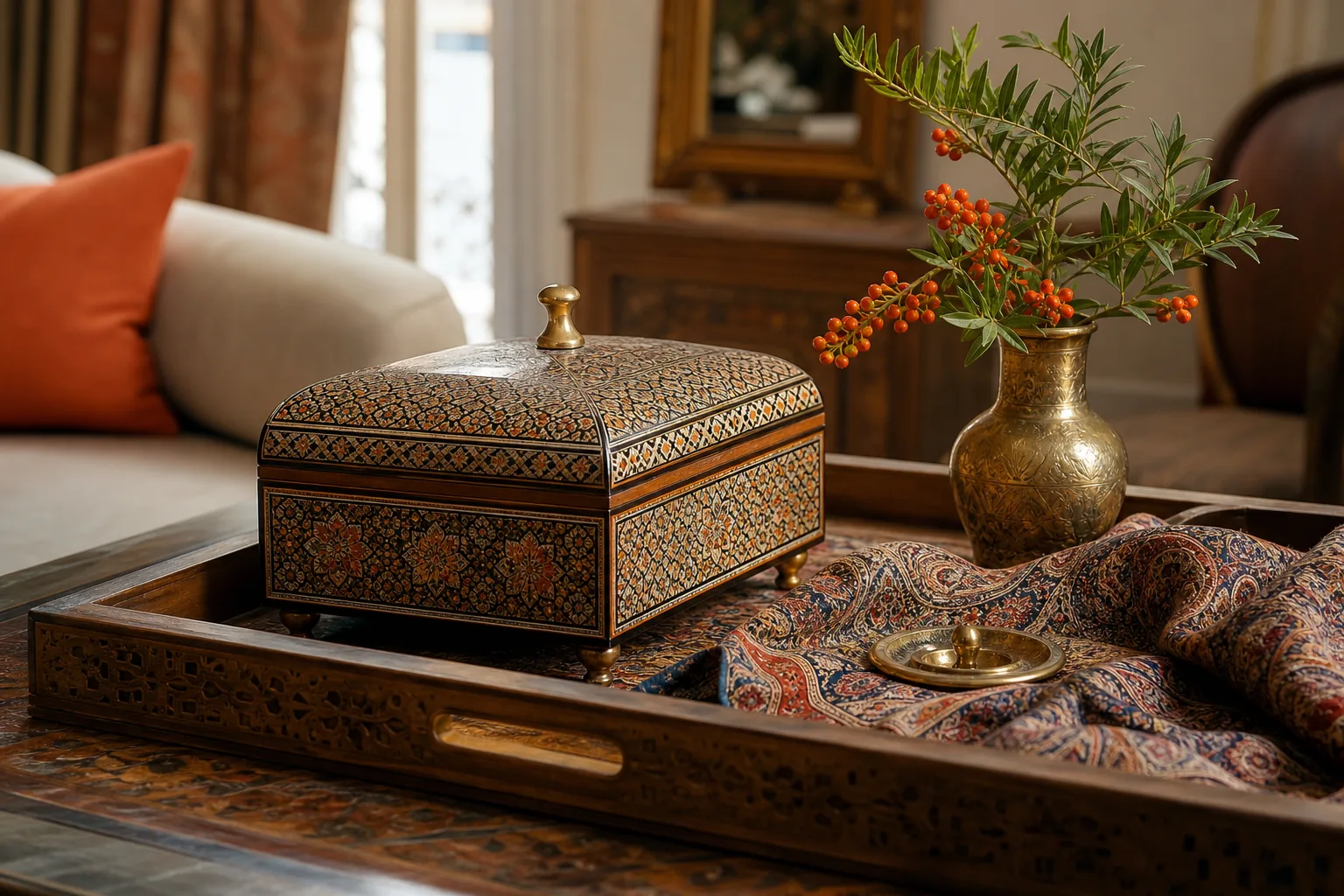
Once everything is placed, step back and view the tray from each seating position. If a piece blocks a view or feels heavy, remove it. The rule of three still applies: tall anchor, middle layer, low base. When the composition feels balanced, the eye can glide across without effort.
Maintenance is simple. Dust the tray with a soft, dry cloth. For Pilardi’s hand‑painted wooden trays, a barely damp cloth is enough; avoid harsh chemicals that could damage the finish. Metal or ceramic trays benefit from a quick wipe after each use to prevent water spots.
Remember that the tray is meant to be lifted and moved. Choose a tray with sturdy handles or a low lip if you plan to clear the table frequently. A well‑balanced arrangement not only looks good but also stays functional day after day.
When caring for Persian crafts, use gentle cleaning methods to preserve intricate marquetry.
FAQ
What size tray should I use for a standard coffee table?
A tray that covers about one‑third to one‑half of the tabletop works best; aim for a length roughly two‑thirds of the table’s length.
Can I use a round tray on a rectangular table?
Yes, a round tray adds visual contrast and softens the angles of a rectangular table, creating a focal point that feels intentional.
How many items should I place on the tray?
Three to five pieces generally provide enough interest without crowding; adjust based on the tray’s size and the daily functions you need.
Is it okay to mix materials like wood and metal?
Mixing materials creates texture and depth; just ensure the finishes don’t clash: a warm wood paired with a brushed metal works well.
How do I keep the arrangement looking fresh?
Swap one accent each season, a new candle colour, a fresh plant, or a different patterned textile, while keeping the hero and base objects the same.
What if I need a place for my remote and coasters?
Include a small ceramic dish or a low‑profile box on the tray; it keeps essentials handy without breaking the visual flow.
Conclusion
Start with a Pilardi hand‑painted decorative tray as your anchor, then layer height, texture, colour and useful objects while preserving breathing space. The tray and the smaller accents that sit on it are all priced under €200, you can browse them together in the Handmade Gifts Under €200 collection. For more ideas on pairing Persian pieces with modern interiors, explore our guide on styling Persian décor here. Happy styling!


