
Guides
How to Style a Large Decorative Wall Mirror

A large mirror can change the feel of a room in one afternoon. It can catch daylight, give a narrow hall more depth, and turn a plain wall into the first thing guests notice. But style comes first only if safety follows close behind, because size and weight decide how the mirror must be mounted.
I use this order when choosing one: measure the wall, pick the shape and frame, plan the composition, test the light, then install it with hardware that matches the wall. The result should feel composed, not placed there by guesswork.
Step 1: Measure the Room and Define the Mirror’s Role
Before you shop for a large decorative wall mirror, decide what you want it to do. A mirror may reflect a window, fill an empty wall, support a dressing area, or act as the main art object in the room.
Stand where you usually enter the room. What do you see first? If the wall faces a window, the mirror can bounce daylight deeper into the space. If it faces a busy shelf or television, the reflection may add clutter instead. Move a sheet of cardboard against the wall to test the view before you buy.
Measure the clear wall area, not the whole wall. Mark doors, switches, sconces, vents, picture rails, and furniture. Leave enough space for doors and drawers to open without striking the frame.
| Room or use | Starting size rule | Best placement test | Common mistake |
|---|---|---|---|
| Bathroom vanity | About 70 to 80 percent of vanity width | Center it over the basin and check the sightline from standing height | Letting the frame extend far beyond the vanity |
| Living room accent wall | About 60 to 75 percent of the usable wall width | Place it above the main furniture group | Measuring from the full wall while ignoring side gaps |
| Dining area | Size it to the table and nearby light source | Check what the glass will reflect during a meal | Reflecting a blank wall or harsh ceiling light |
| Hallway | Use the longest clear section of wall | View it from the entry and from the far end | Blocking a narrow passage with a deep frame |
These ranges are useful starting points, not laws. A small, highly worked frame can need more breathing room than a plain one. A wide mirror may need less height when it sits above a console.
Most style guides talk about size but skip weight. That gap matters. A floor-to-ceiling installation can exceed 100 kilograms. Ask the maker for the exact packed weight and finished weight before you plan the wall.
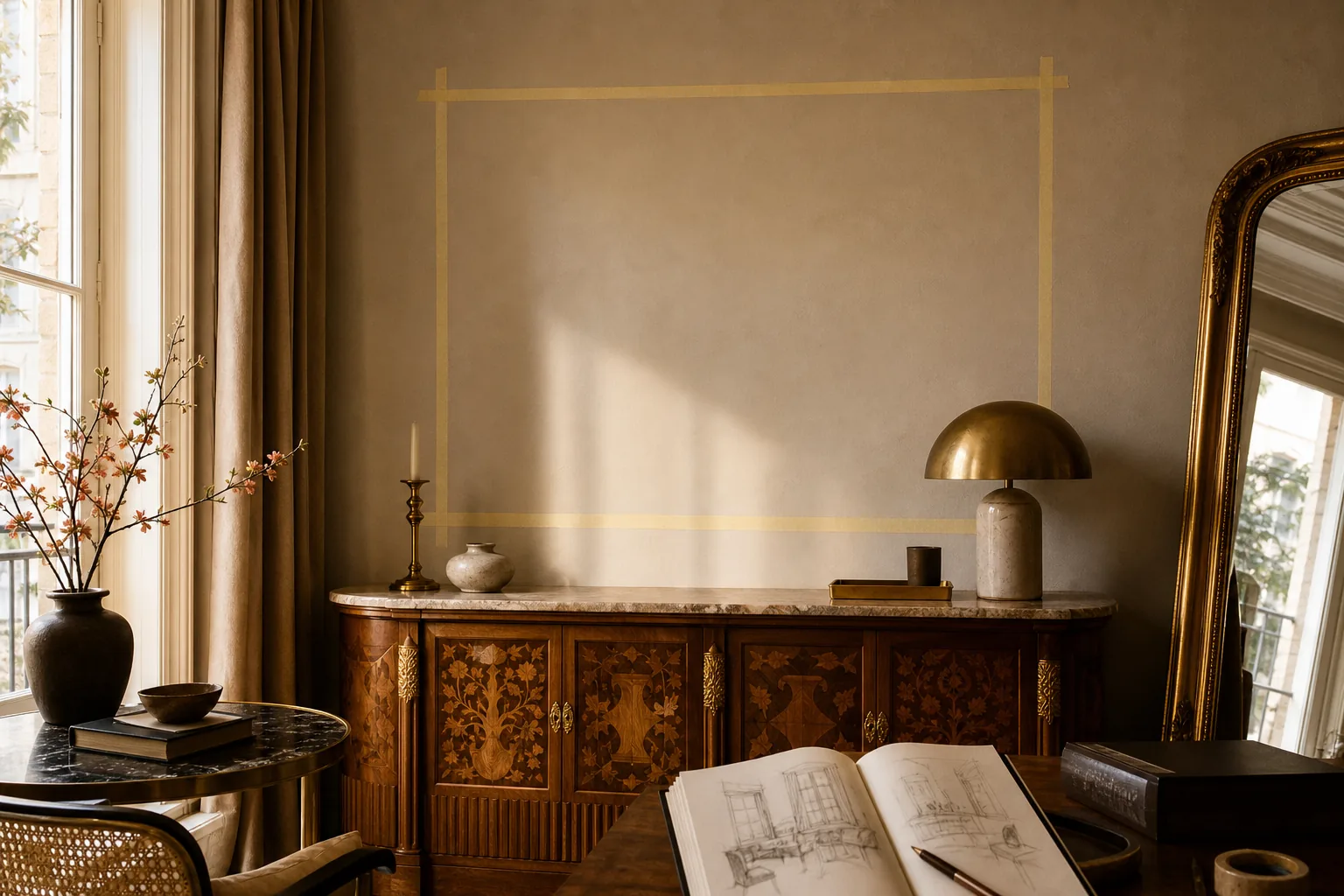
For rooms with an existing mirror, I like to sketch the wall to scale. Mark the mirror as a rectangle first. Then draw the furniture, light sources, and walking path. This makes the missing numbers visible before they become an expensive problem.
Step 2: Choose the Shape and Frame Style for the Room
Shape gives a large decorative wall mirror its first visual signal. Rectangular, round, square, arched, oval, and irregular forms can all work, but they create different lines in a room.
Use a rectangle when the room has strong horizontal lines. It can echo a mantel, console, long dining table, or low cabinet. A round mirror softens a room with many corners. An arch adds height and suits a tall entry or a wall beside a stair.
In a bedroom, an oval or softly rounded design can sit above a dresser without making the wall feel hard. In a hallway, a vertical shape draws the eye along the path and can make the ceiling seem higher. In a dining area, a round form can echo the table, while an irregular frame can act as art above a narrow sideboard.
Match the frame to the room’s visual weight
Start with the material already in the room. Warm wood asks for a frame with a similar warmth. Dark metal can repeat a black window frame or lamp base. A painted decorative frame may work best when the room has quiet walls and restrained furniture.
Persian mirror work can bring a different kind of detail. At Pilardi, I look for a balance between the painted surface, the reflective center, and the wall around it. Each piece is one-of-one, handcrafted by artisans in Isfahan, then curated and shipped from Paris. The frame should have room to be seen.
Our Hand-Painted Tazhib Mirror, Black & Gold (40 × 34 cm) is a good example of a smaller decorative mirror with strong visual presence. Its black and gold palette needs less nearby pattern than a plain glass mirror would.
Decorative style guides often group mirror frames into traditional, Art Deco, and contemporary families. I find those labels useful only after looking at the room’s actual lines. A geometric frame may suit an Art Deco room, yet one ornate piece can also give a simple modern wall a point of focus.
Test the finish before committing
Cut paper to the mirror’s outside size. Paint or mark the paper with the proposed frame color. Tape it to the wall for a day. Look at it in morning light, at night, and with the room lamps on.
For a DIY frame, use a firm backing board and plan the total weight before adding embellishments. Skewers, small tiles, beads, spoons, gems, and vinyl tape can build pattern around a plain mirror. Hot glue may hold a light craft project, but it should not become the only support for a heavy wall installation.
Also consider the surface you will clean. Deep grooves collect dust. Raised paint can catch a cloth. Hand-painted work needs a gentler touch than a sealed plastic frame. The best frame is the one whose care fits your home.
Step 3: Position the Mirror as a Focal Point or Layered Composition
Position a large decorative wall mirror around a clear visual anchor. That anchor might be a fireplace, console, bed, dining table, or entry bench.
Above furniture, keep the mirror connected to the piece below it. A small gap can create air, while too much space makes the mirror float. Use the furniture width as your guide rather than centering the glass on the entire wall.
For a focal wall, remove competing objects from the mirror’s immediate area. One tall plant or a low ceramic object may support the composition. Five small accessories can make the reflection feel crowded.
Use reflections with intent
Walk through the room and note what the glass will show. A window, artwork, warm lamp, or textured curtain can make a reflection feel deep. A pile of cables, open shelves, or a blank ceiling can do the opposite.
A mirror does not add floor space, but it can make the room read as wider by repeating light and nearby lines. Place it opposite a light source at an angle when possible. A straight-on view of a bright window can produce glare, so shift the mirror a few degrees if the wall allows.
In a narrow hall, a vertical mirror near the end wall can extend the sightline. In a living room, a wide mirror above a console can join two areas without adding another large art object. In a bedroom, a tall mirror near a wardrobe helps with dressing while still acting as wall décor.
Layering also works. Pair one large mirror with smaller framed works, but keep a clear edge around the main frame. Match one detail across the group, such as brass, blue paint, or a repeated curve. The pieces can differ in subject while sharing one visual thread.
With a hand-painted Persian mirror, I prefer fewer surrounding objects. The painted details already carry pattern. A quiet wall and one related accent can show the craft better than a dense gallery grid.
If you want room-by-room examples, Pilardi’s Decorative Wall Mirror Ideas for Every Room applies the same ideas to scale, shape, placement, and light.
Step 4: Add Lighting Without Creating Glare
Lighting can make a large decorative wall mirror glow, but the wrong angle can turn the glass into a bright white patch.
First, switch on every lamp in the room. Stand in the main viewing spot. If a bulb reflects as a sharp dot, move the lamp to the side or raise it. Soft light from an angle usually gives the frame more depth than a bare bulb aimed at the glass.
Choose the light source by purpose
- Daylight: Place the mirror where it can catch a window without facing the sun head-on.
- Wall sconces: Put them on either side when the frame leaves enough room.
- LED strips: Hide them behind a suitable frame for a low halo of light.
- Puck lights: Use them in a nearby shelf or display area, not pressed against an unsuitable painted surface.
- Candles: Keep real flames well away from wood, textile, paint, and hanging hardware.
A warm lamp can bring out gold, red, and ochre in a painted frame. A cooler lamp may make blue and green look sharper. Test the light at night before you fix the wiring or mounting.
Do not attach heat-producing lights directly to a frame unless the maker approves that setup. Keep wires away from the mounting points. If the mirror moves when the light is switched on, stop and fix the vibration before adding more weight.
Reflection is also a safety issue. A mirror opposite a bright window may flash into someone’s eyes. In a dining room, a low lamp reflected in the glass can distract guests. Shift the angle, move the light, or choose a shade that spreads the beam.
For a hand-painted piece, I keep light aimed at the surrounding wall rather than the painted surface. The frame stays readable, while the mirror still catches a soft wash.
Run a final check from every seat and doorway. A lighting plan that works from the sofa may fail from the hall.
Step 5: Install the Mirror With the Right Hardware and Wall Support
Installation is where a beautiful large decorative wall mirror becomes either secure or risky. Never choose hardware from the mirror’s look alone. Match it to the finished weight, frame design, wall type, and fixing points.
Ask the maker for the exact weight and the recommended mounting method. If that information is missing, pause the project. A mirror that feels manageable while held by two people may place far more load on a small fixing once it hangs on the wall.
Check the wall before drilling
- Concrete: Use masonry anchors rated for the load.
- Metal studs: Use suitable toggle bolts and confirm the fixing fits the stud system.
- Wood studs: Fasten into the stud with screws rated for the load.
- Drywall without a stud: Do not assume standard half-inch drywall can carry a heavy mirror by itself.
For a heavy installation, a contractor may add three-quarter-inch fire-retardant plywood blocking between studs. That gives the hardware a stronger area to bite into. The wall must be opened and checked before this work, so it belongs in the plan rather than after a failed fixing.
A French cleat spreads the load across a longer horizontal line. Heavy-duty toggle bolts can support other mounting points when the wall system allows them. Use hardware with a stated load rating above the finished mirror weight, not close to it.
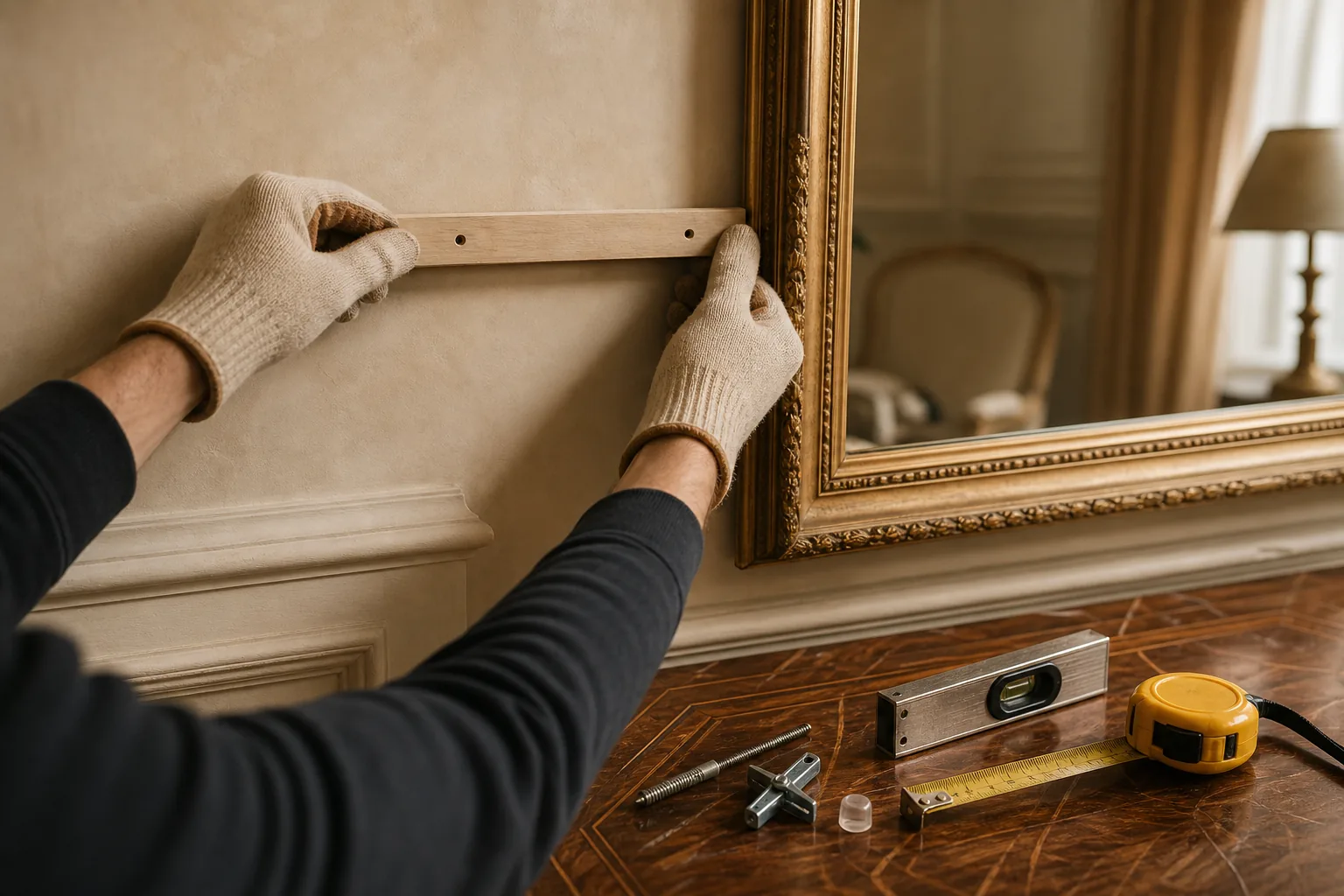
Before lifting the mirror, mark the cleat or bracket with a level. Have two people carry a large piece. Wear eye protection while drilling. Keep the mirror wrapped until the wall fixings are ready, because a small edge strike can damage the glass or frame.
Add silicone bumpers or foam pads at contact points where the frame meets the wall. They can reduce vibration and keep the lower edge from tapping the wall. Safety film may provide another layer of protection if the glass breaks, but confirm that it suits the mirror and frame before applying it.
Adhesive alone is a poor choice for a heavy decorative mirror unless the manufacturer specifies the product, surface, cure time, and load limit. Light-duty temporary mounting products may suit light craft mirrors, but they are not a substitute for structural hardware on a large artisan piece.
After hanging, test the frame with a gentle hand check. Look for tilt, wall movement, a loose cleat, or stress at one corner. Recheck it after a few days and after any nearby construction or strong vibration.
I explain the full wall check in Pilardi’s guide to hanging a heavy mirror safely. If the mirror is unusually large, the wall is weak, or the fixings are unclear, hire a qualified installer.
Step 6: Care for the Mirror and Preserve Its Craftsmanship
Care for a large decorative wall mirror by treating the glass, frame, and mounting system as separate materials. A clean glass surface does not make a damp cloth safe for painted detail.
Clean the glass without soaking the frame
Dampen a soft cloth, not the mirror itself. Wipe in small sections, then dry the surface with a clean lint-free cloth. Keep liquid away from the frame edge, painted relief, joints, and backing.
For a hand-painted Persian mirror, I use very little moisture. Dust the frame with a soft brush or dry cloth first. Never scrub raised paint to remove a mark. Test any cleaner on a hidden area only after checking the maker’s care advice.
Do not use abrasive pads, rough paper towels, or strong solvents on decorative surfaces. They can dull paint, scratch glass, or lift a finish at the edge. If wax, oil, or adhesive reaches the frame, stop rather than rubbing harder.
Check the room and the hardware
Keep the mirror away from direct splashes and long periods of high humidity unless it is made for that setting. In a bathroom, run the fan and wipe moisture from the frame when needed.
Inspect the lower edge and corners twice a year. Watch for a gap from the wall, a loose bracket, a tilted frame, or a change in the cleat. Do not wait for visible damage before checking the fixings.
Keep furniture from pressing against the mirror. In a hall, allow bags and coats to pass without striking the frame. In a dining room, place chairs so they cannot hit the wall when pulled back.
One-of-one work deserves a calm care routine. Pilardi’s mirrors are handcrafted by artisans in Isfahan, with each piece curated and shipped from Paris. The point of that process is not to make the object untouchable. It is to give the surface enough care that its hand-painted detail remains part of the room for years.
Save the product record, care notes, and installation details. If you move, give the next installer the weight and fixing information. Remove the mirror with two people and protect the corners before transport.
Frequently Asked Questions
How big should a large decorative wall mirror be?
A large decorative wall mirror should usually fill about 60 to 75 percent of a usable wall or about 70 to 80 percent of a vanity’s width. Measure only the clear area around doors, lights, and furniture. Then test the outside frame size with cardboard, since the frame can change the balance as much as the glass.
Where should I place a large mirror in a living room?
Place a large mirror above a main furniture group, such as a console or mantel, while keeping the reflection calm. Face it toward a window or attractive light source at an angle. Avoid reflecting clutter, a television, or a bare ceiling. Check the view from the doorway before you fix the mounting points.
Can a large decorative mirror make a room look bigger?
Yes, a large decorative mirror can make a room feel wider by reflecting light and repeating nearby lines. It does not add floor area, so placement matters. A mirror facing a bright window may add depth, while one facing a crowded shelf may make the room feel busier.
What is the safest way to hang a heavy decorative mirror?
The safest method is to use hardware rated above the mirror’s finished weight and fasten it to a suitable wall support. Concrete may need masonry anchors. Studs may need screws or toggle bolts suited to the system. A French cleat can spread the load. Ask a qualified installer when the weight or wall structure is unclear.
How do you light a decorative wall mirror without glare?
Light a decorative wall mirror from the side or with a soft wash aimed at the wall. Avoid pointing a bare bulb straight at the glass. Test the mirror from each seat and doorway at night. Shift the lamp or mirror angle if you see a sharp bright spot or if the reflection feels harsh.
How do you clean a hand-painted mirror frame?
Clean a hand-painted mirror frame with a dry, soft brush or cloth unless the maker gives different instructions. Apply a suitable cleaning solution to the cloth rather than the frame. Keep water away from painted relief and joints. Skip abrasive pads and strong solvents, then inspect the mounting hardware after cleaning.
My recommendation is to choose the frame and shape you love, then let the wall and weight set the installation plan. If a hand-painted Persian mirror suits the room, review the product details with the mounting surface in mind, measure the wall today, and ask for installation guidance before lifting the piece.


