
Guides
Tiger Eye Bracelet Meaning: A Practical Guide

A tiger eye bracelet can look quiet at first, then catch the light with a sharp golden flash. That contrast explains much of its appeal: people link the stone with courage, focus, protection, and calm strength. I’ll show you how to read its symbolism, wear it with purpose, choose good beads, and care for the piece without making claims the stone can’t prove.
Step 1: Understand Tiger Eye Bracelet Meaning and Symbolism
The meaning behind a tiger eye bracelet starts with the stone’s look. Tiger eye is a quartz-rich gemstone with a silky band of light called chatoyancy. As you turn a bead, the bright line seems to move across its surface like a watchful eye.
That moving light shaped the stone’s main symbols. In crystal traditions, tiger eye stands for courage, clear thought, willpower, and grounded action. It’s often chosen by someone who wants to stay steady before a hard talk, a new role, or a large decision.
The color adds another layer. Golden brown suggests sun, warmth, and confidence. Dark brown brings the mind back to earth. Red tiger eye is often linked with drive, while blue tiger eye, also called hawk’s eye, is associated with a cooler and more watchful mood. These are symbolic readings, not fixed rules.
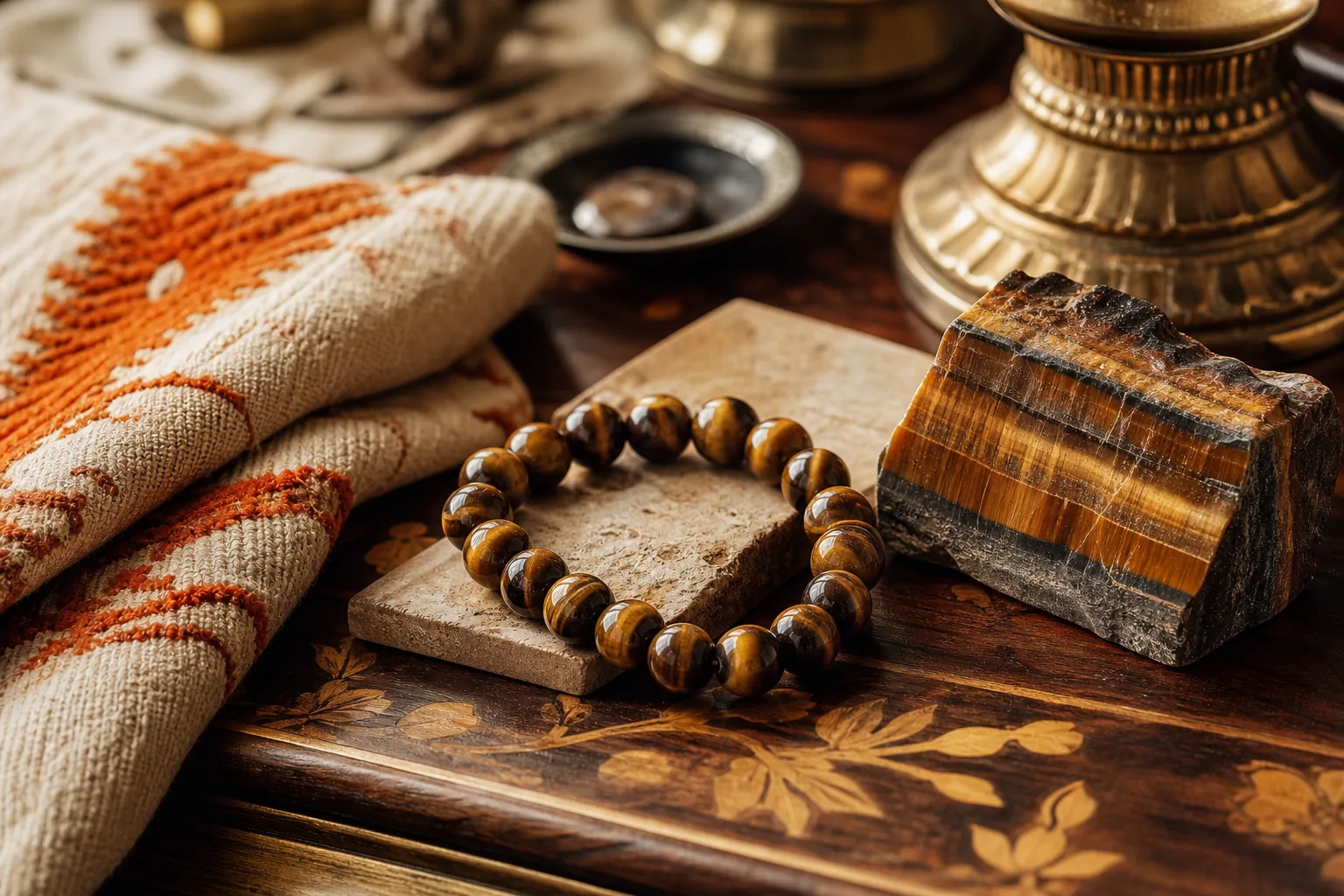
Stories about the stone reach across several traditions. Some accounts connect it with Roman soldiers who carried it for strength. Other accounts point to ancient Egyptian sun imagery, South African mineral sources, or Chinese zodiac symbolism around the tiger. Treat these as cultural and spiritual traditions, not as proof that a bracelet can change events.
The protection symbol is easy to understand. An eye watches. A tiger sees. In modern crystal practice, that image becomes a form of psychic shielding, especially in tense rooms or around people who leave you drained. Wearing the bracelet can give you a small physical cue to pause, stay objective, and keep your limits.
One point gets missed often. Tiger eye isn’t tied only to the solar plexus chakra. Many crystal sources also connect it with the root and sacral chakras. In practice, that gives the stone a useful three-part map: the root for steadiness, the sacral area for creative motion, and the solar plexus for confidence.
Step 2: Use Tiger Eye for Focus, Confidence, and Grounding
To use tiger eye bracelet meaning in daily life, give the stone one clear job. Don’t ask it to fix every problem. Choose a simple cue, such as “stay calm during this meeting” or “finish the task in front of me.”
For focus, hold the bracelet for a few breaths before work. Look at one golden band. Name the next task out loud. Then begin. The bracelet won’t replace a plan, but the small ritual can interrupt scattered thought and bring your attention back to the next action.
For confidence, place your hand over your upper stomach while wearing it. This is the area crystal traditions associate with the solar plexus, sometimes called the navel chakra. Picture the golden color as a reminder of your own judgment. Then write down the choice you need to make. Keep the task human and specific.
For grounding, use the root-chakra idea. Sit with both feet on the floor. Notice the weight of your body and the texture of the beads. Take a slow breath before you answer a message or enter a difficult room. This approach uses the bracelet as a sensory anchor rather than a medical treatment.
Crystal traditions also link tiger eye with luck, wealth, and financial stability. Some people keep it near a wallet or cash box. Others wear it on the receiving hand during a money-focused ritual. I prefer a more useful version: wear it while reviewing a budget, setting a fee, or making a careful purchase. Let the symbol support clear action, not wishful thinking.
Sources that discuss the stone’s spiritual use often place it near the solar plexus during meditation. They also describe it as a shield in high-stress settings. Keep its healing language in the realm of belief.
There’s a firm limit here. A bracelet can’t treat anxiety, depression, pain, sleep problems, or any other health condition. If you feel unwell, seek medical care. You can still use the stone beside a healthy routine, such as a walk, a written plan, or a short breathing break.
For relationships, tiger eye is often used as a boundary stone. Wear it before a talk where you need to say what you want without becoming harsh. Ask yourself one question: “What do I know, and what am I assuming?” That question fits the stone’s link with clear sight better than a promise of guaranteed romance.
Step 3: Wear and Style Your Bracelet Intentionally
Wearing advice is part of tiger eye bracelet meaning, but there is no single wrist that works for everyone. In many crystal practices, the left hand is the receiving side. The right hand is the giving or projecting side. Start with the left wrist if you want an inward reminder of calm and confidence.
Switch to the right wrist when your focus is outward. That might mean a presentation, a negotiation, or a day in a busy workplace. Some traditions reverse these meanings, so your comfort matters more than a strict rule. Try each wrist for a week and note which one helps you remember your intention.
Fit matters. The beads should sit close enough to stay in place, but not press into your skin. A bracelet that pinches will distract you. If you choose a hand-braided design, check that the cord lies flat and the closure feels secure before wearing it for a long day.
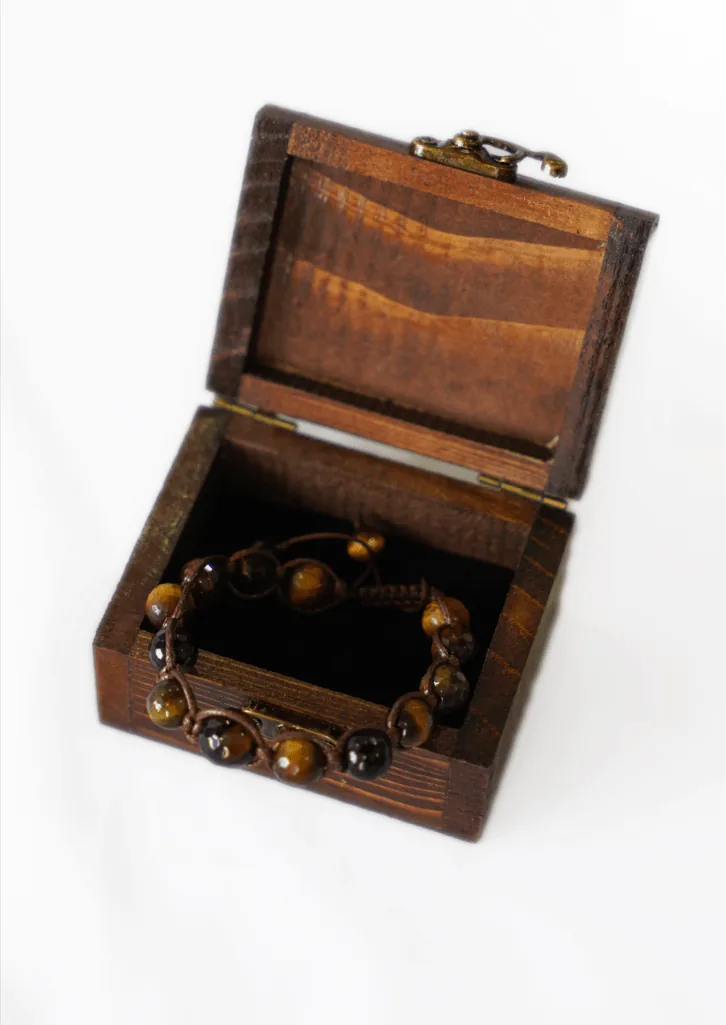
Tiger eye has a polished, professional look. It works with a plain watch, a narrow metal cuff, or a single cord bracelet. Keep the stack restrained if you want the stone’s moving light to remain easy to see. Too many large beads can hide the chatoyancy.
If you want to pair stones, begin with one other piece. Clear quartz keeps the palette light. Amethyst adds purple contrast. Rose quartz softens the warm brown. A multi-stone design can work well when the colors have space between them, rather than competing bead by bead.
For a quiet work look, wear tiger eye with a white shirt, dark knit, or natural linen. For evening, warm metal and deep brown bring out the gold flash. I like the stone best when it feels lived with, not arranged like a costume.
Our Tiger's eye macramé bracelet is hand-braided and made with natural stone, so it suits readers who want a wearable piece with visible craft. At Pilardi, every piece is one-of-one, handcrafted by artisans in Isfahan, Iran, then curated and shipped from Paris.
Remove the bracelet before sport, bathing, or sleep if the cord or stone may catch, rub, or stay wet. Some people also prefer removing tiger eye at night because its symbolism feels active or mentally bright. That is a personal response, not a safety rule.
Step 4: Choose Authentic, High-Quality, and Responsibly Sourced Beads
Choosing well means looking past the words “natural stone.” A quality tiger eye bracelet should show the stone’s own structure, clear color shifts, and a believable account of how the beads were selected and made.
Start with the flash. Turn each bead under a lamp or near a window. Good tiger eye often shows a clear moving band, with contrast between darker and lighter areas. The flash doesn’t need to be identical on every bead. In fact, slight variation can support the sense that the beads came from natural material.
Then inspect the surface. Look for smooth polish, clean holes, and edges without sharp chips. Small natural marks aren’t a flaw by themselves. Deep cracks, cloudy filler, or a plastic feel deserve questions. Ask whether the color is natural, dyed, or heat-treated.
Color can help you spot treatments. Golden brown is the familiar form. Very bright, even red or blue may be treated or dyed. Natural blue hawk’s eye tends to look dark and muted, often with some gold still present. A seller who names treatments plainly earns more trust than one who uses vague claims.
Tiger eye’s mineral history can also cause confusion. It began with fibrous crocidolite that became replaced and enclosed by quartz. The finished gemstone is not the same as loose asbestos fibers. Still, avoid cutting, drilling, or sanding beads at home. Wear eye protection and use proper dust control if you make jewelry from rough material.
Mining location alone doesn’t prove quality. South Africa is often named as a major source in crystal and bead discussions, but origin should come with a clear seller statement. Ask where the rough stone came from, who shaped the beads, and whether the maker can describe the workshop process.
Ethical sourcing is hard to prove with a slogan. Look for useful details:
- The seller names the stone and any treatment.
- The maker or artisan process is explained without invented stories.
- Product photos show the actual bead pattern, not only a stock image.
- The bracelet has a clear size and material description.
- The seller explains how it handles one-of-one work and replacements.
That last point matters to collectors. A handmade bracelet should have small signs of the hand: a slight shift in bead tone, a braid with its own rhythm, or a closure finished with care. Those details don’t make the item imperfect. They tell you it wasn’t made to look identical to thousands of others.
Pilardi’s handmade gemstone bracelets fit this way of buying. I curate one-of-one pieces made by artisans in Isfahan, Iran, and ship them from Paris. If you want to compare stones and woven styles, the handmade gemstone bracelet collection gives you a better starting point than judging a bead from a generic image.
Step 5: Care for, Recharge, or Make a Tiger Eye Bracelet
Caring for a tiger eye bracelet is simple. Wipe the beads with a soft, dry cloth after wear. Keep the piece away from perfume, oil, harsh soap, and long exposure to water. Those habits protect both the stone’s finish and the bracelet cord.
If the bracelet gets wet, pat it dry rather than leaving it on a radiator or in strong heat. Store it in a soft pouch where it won’t rub against metal or harder stones. A shallow drawer works well if the pouch stays dry and the cord isn’t bent sharply.
“Cleansing” and “recharging” mean different things to different people. In spiritual practice, moonlight is a common choice. Place the bracelet on a clean cloth near a window overnight. You can also set it on a selenite plate if that belongs to your practice. These rituals may help you reset your intention, but they don’t change the stone’s chemistry.
Running water is another popular method, though I’d use it briefly and only when the bracelet’s cord and finish can handle moisture. Never soak a braided bracelet for hours. Sunlight is also used by some people, but strong heat and long exposure may affect cord, dye, or finish, so a shaded windowsill is the safer choice.
To make a simple bracelet, first measure your wrist with a flexible tape. Add enough room for comfort, then choose rounded beads with matching hole sizes. Thread the beads onto suitable elastic or cord. Tie the finish with a secure knot and test the bracelet over a soft surface before wearing it outside.
DIY work is best for learning, not for pretending every bracelet has the same value. Bead quality, braid skill, closure work, and provenance all shape the finished object. If you want a piece made by an artisan, buy one with a clear process rather than copying the look with unverified materials.
Once a month, check each bead and the cord. Look for loose knots, stretched elastic, or a rough edge. Repair the bracelet before it breaks. If a bead has a deep crack, retire it from daily wear and keep it as part of your mineral collection.
At Pilardi, I see a gemstone bracelet as something you can wear, gift, or collect. Its value begins with the stone and continues through the hands that braid and finish it. That is why care should be gentle and regular, not dramatic.
FAQ
What does a tiger eye bracelet mean?
A tiger eye bracelet usually means courage, focus, protection, confidence, and grounding in crystal symbolism. Its golden moving band is linked with watchfulness and clear sight. Many people wear it as a reminder to stay calm during pressure, make a firm choice, or hold a personal boundary. These meanings are spiritual traditions, not proven medical or financial effects.
Which wrist should I wear tiger eye on?
Wear tiger eye on your left wrist if you want an inward cue for grounding and confidence. Many crystal traditions treat the left side as receptive. Use the right wrist when you want a symbolic reminder to project strength or block unwanted energy. There is no scientific rule for wrist choice, so keep the side that feels comfortable and useful.
What chakra is tiger eye good for?
Tiger eye is most often linked with the solar plexus chakra, but many traditions also connect it with the root and sacral chakras. That combination fits its common symbolism: steadiness below, creative motion in the middle, and confidence near the upper stomach. You can place it near the solar plexus during meditation, but don’t treat chakra work as medical care.
Can tiger eye attract money?
Tiger eye is traditionally called a wealth or prosperity stone, but no bracelet can guarantee money. Some people keep it near a wallet or wear it during a financial ritual. A more grounded use is to wear it while reviewing a budget, setting a price, or planning a purchase. Let the symbol support careful action rather than replace it.
Is tiger eye safe to wear?
Finished tiger eye is generally worn as a polished gemstone, and the old asbestos association refers to its mineral origin rather than loose fibers in a bracelet. Don’t cut, sand, or drill the stone without proper dust control. Remove the bracelet if its cord irritates your skin, and ask a qualified professional about any safety concern tied to your health.
How do I cleanse a tiger eye bracelet?
You can cleanse a tiger eye bracelet by wiping it with a soft cloth, placing it in moonlight, or rinsing it briefly if the cord allows water. Store it in a soft pouch afterward. Many people use these steps as a spiritual reset. Avoid long soaking, harsh soap, strong heat, and direct sun for long periods.
Conclusion
Choose tiger eye when you want a wearable reminder of clear sight and grounded courage, not a promise of instant luck. Start with a well-made bracelet whose stone, craft, and provenance are clear. If that approach speaks to you, explore Pilardi’s tiger eye piece, set one honest intention, and wear it through a day when you want to stay steady.


