
Guides
How to Set a Dinner Table: A Simple Guide

A well-set table feels calm because every piece has a place. The plate sits in the center, flatware follows the order of the meal, and the glassware stays within easy reach. If you’re learning how to set a dinner table, start with the foundation, then build the setting in clear layers.
Step 1: Prepare the Table and Choose the Foundation
The first step in how to set a dinner table is to clear the surface and choose the layer that will frame each place setting.
Remove anything that doesn’t belong on the table. Check that the table is stable. Wipe the surface before you add cloth or dinnerware. A clean start makes spacing much easier.
Next, decide how formal the meal will be. A full tablecloth gives the setting a dressed look. A runner leaves more of the table visible. Placemats define each guest’s space and work well for a relaxed meal.
You can also combine layers. Place a cloth beneath a runner when you want more texture. Use a folded square cloth as a center runner if a full drape would feel too heavy. Pilardi’s guide to using a Persian tablecloth explains how pattern and overhang affect the balance of the table.
For a full cloth, let the fabric fall evenly on every side. It shouldn’t pool on the floor or catch against guests’ knees. A smaller cloth can work as a central layer instead of a full cover.
Ghalamkari is a hand-block printed textile tradition. The repeated motifs may show slight changes in line or pigment. Those small shifts are part of the hand process, not a flaw. If you choose a printed cloth, let it carry the visual weight. Keep the dinnerware fairly quiet around it.
Now mark each place. Leave enough room for a chair to pull out without brushing the next setting. The exact gap depends on your table and chairs, so use the guest’s elbow space as your guide.
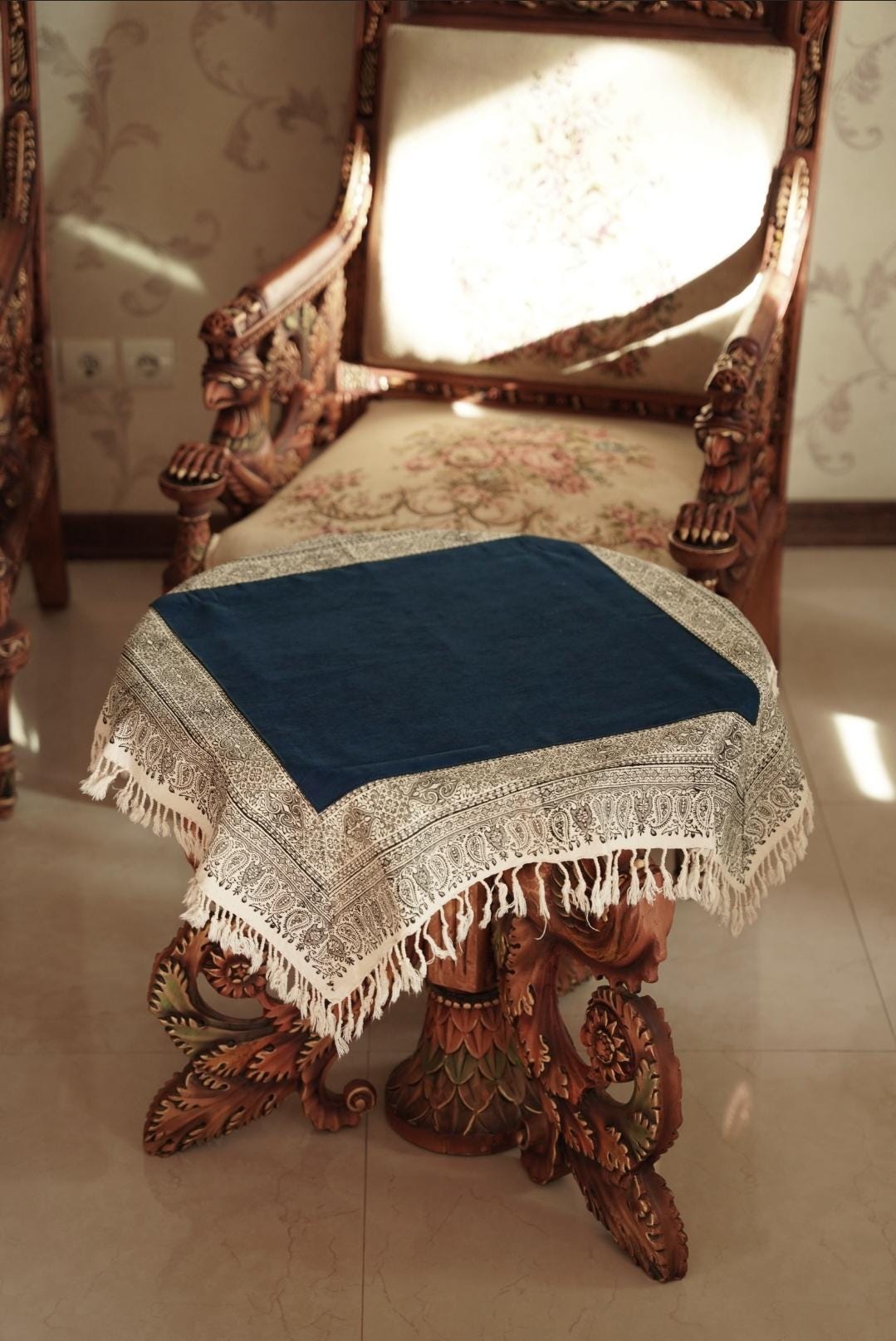
By now you should have a clear table, an even base layer, and a rough position for each guest. The plate can go down next.
Step 2: Place the Dinnerware in the Correct Order
To set a dinner table well, center the dinnerware on the guest’s chair and build outward from the main plate.
Start with a charger if you’re using one. A charger is a broad base plate that stays beneath the dinner plate during the meal. Place it about an inch from the table edge, then center the dinner plate on top.
If you don’t have a charger, place the dinner plate in the same position. The plate should face the guest squarely. It shouldn’t sit so close to the edge that a sleeve or hand can knock it forward.
For a meal with several courses, add only the plates you’ll use. A salad plate can sit above the dinner plate. A soup bowl belongs on the dinner plate when soup is served. Don’t fill the table with spare pieces. Empty dinnerware takes up room and makes the setting feel stiff.
The order should follow the meal. The first plate or bowl a guest needs should be easiest to lift. Once that course is cleared, the next piece is ready beneath it or is brought in by the host.
Keep the plate stack level. If a small plate rocks, check for crumbs or a cloth fold beneath it. A tiny adjustment can stop dishes from sliding when guests cut food.
For bread, place a small bread plate above the forks, toward the upper left of the main plate. A butter knife may rest across that plate. Keep its blade turned inward, just as you would with a dinner knife.
Formal settings often include more dinnerware than a family meal. The difference is planning, not decoration. If you’re serving one main course, one dinner plate may be all you need. Add a bowl only when the menu calls for it.
There’s a useful visual test. Sit in the chair and look straight ahead. The main plate should be centered with your body. The top edge of the plate should leave room for flatware below and glassware above.
A place setting is arranged around the diner’s position, with each piece placed for its role during the meal. That simple idea keeps the layout clear.
By now you should have a stable plate stack with no extra pieces crowding the guest’s space. Flatware and glasses can now follow the plate.
Step 3: Arrange Flatware, Glassware, and the Napkin
Flatware gives the setting its working order. For a standard dinner table, forks go on the left, while knives and spoons go on the right.
Place the dinner fork closest to the plate. If you’re serving salad first, put the salad fork farther left. For several courses, guests work from the outside toward the plate. The utensil farthest from the plate is used first.
Set the dinner knife to the right of the plate. Turn the blade toward the plate. This keeps the sharp edge away from the guest and gives the setting a neat inner line.
If soup comes before the main course, place the soup spoon to the right of the knife. A teaspoon belongs farther right only when coffee or tea will be served at the table.
Keep the lower ends of the flatware even. The handles don’t need to touch the table edge, but they should form one clean line. Avoid placing utensils so close that guests must squeeze their fingers between them.
Glassware sits above the knives, on the upper right side of the place setting. Put the water glass closest to the plate. Add the wine glass to its right or slightly lower. If you serve champagne, place the flute behind the other glasses or form a small diamond with the group.
For more than two glasses, use the shape that gives guests the most room. A tight cluster looks neat but can lead to bumped stems. The glasses should be close enough to reach without leaning across the plate.
One memory aid is B-M-W, meaning bread on the left, meal in the center, and water on the right. It helps when you’re setting several places at once. You can also place glasses in alphabetical order by the drink name, but the meal sequence is easier for most guests to follow.
Fold the napkin beside the forks for a simple setting. You can also place it on the dinner plate if the plate is clean and no food is ready to serve. For a more formal look, use a napkin ring or fold the napkin into a low layer. Keep the fold easy to lift.
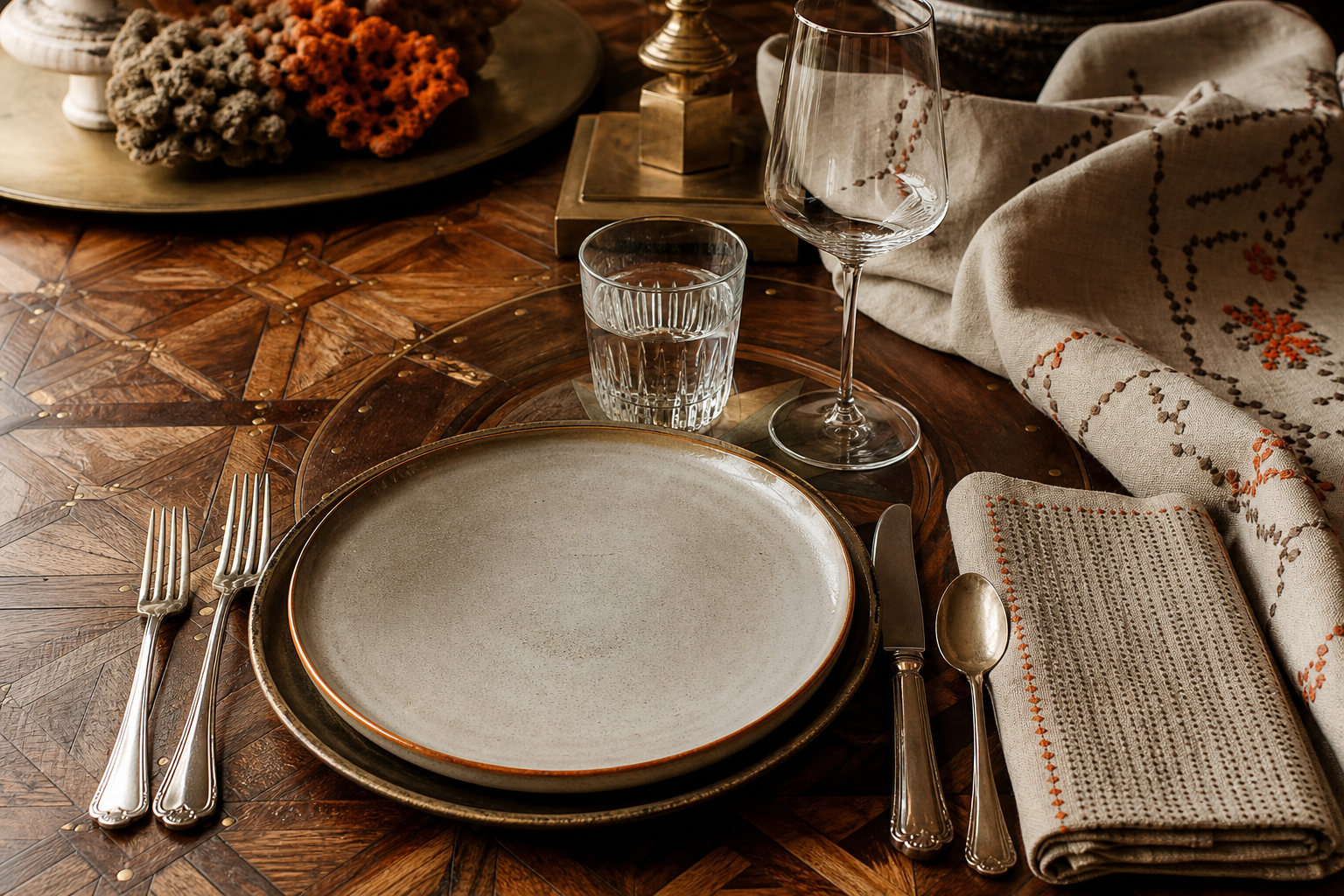
A decorative accent can sit near the setting, but it shouldn’t block a glass or compete with the plate. At Pilardi, I look for objects that can live near the table without turning it into a display case. A small hand-painted tray can hold salt, folded place cards, or a candle when the meal begins.
By now you should have a complete working place setting. Test it from the chair. If your hand can reach each item without crossing another guest’s space, the arrangement is doing its job.
Step 4: Add a Centerpiece and Adapt the Setting to the Occasion
The last step in how to set a dinner table is to add a centerpiece that leaves room for sightlines and service.
Start low. Guests should be able to see across the table while seated. A long runner can guide the eye through the center. A small tray can hold one object and keep loose items from spreading.
Choose one main idea for the center. If the cloth has a strong block print, keep the centerpiece plain. If the table is bare, a crafted object can bring in pattern or color. Too many unrelated accents make the setting hard to read.
For a casual dinner, use placemats or a narrow runner. Put the napkin beside the plate and bring out only the flatware the menu requires. This setup feels easy because guests don’t need to decode it.
For a formal dinner, begin with a charger. Add the full flatware sequence and arrange the glasses with care. A folded napkin or ring can mark the place without adding another object to the plate.
For a buffet meal, leave more room in front of each chair. Guests will need to set down plates as they return to the table. Keep serving dishes at one end or on a nearby surface rather than placing them between every setting.
For a small round table, a central textile can work better than a long runner. Pilardi’s round block-printed cotton tablecloth is sized for an intimate round setting, so it can define the surface without swallowing the place settings.
Before guests sit down, check the usable details. Make sure chair legs clear the cloth. Remove any centerpiece that blocks the view. Wipe fingerprints from glassware and turn every knife blade inward.
Persian accents work best when they have breathing room. Khatam-kari uses small slivers of wood, brass, and bone arranged into geometric star patterns. A khatam object can sit beside a plain plate or on a quiet console near the dining area. It doesn’t need several patterned pieces around it.
Every Pilardi piece is one-of-one, handcrafted by artisans in Isfahan, then curated and shipped from Paris. When I place one near a table, I think first about its role: should it hold something, mark the center, or simply sit where guests can see it?
FAQ: Dinner Table Setting Questions
How do you set a dinner table correctly?
To set a dinner table correctly, center the plate in front of each chair, place forks on the left, and set the knife and spoon on the right. Put the water glass above the knife. Add only the dinnerware and flatware needed for the meal, then finish with the napkin and a low centerpiece.
Which side does the fork go on?
The fork goes on the left side of the plate. If you have more than one fork, place the utensil for the first course farther from the plate. Guests then move inward as the meal continues. This outside-in order makes a multi-course dinner easier to follow.
Where does the knife go on a dinner table?
The knife goes to the right of the plate with its blade facing inward. Place the soup spoon to the right of the knife when soup is served. Keep the handles in one line so the setting looks even and guests can pick up each piece without shifting the others.
Where do the glasses go when setting a table?
Glasses go above the knives on the upper right side of the place setting. Put the water glass closest to the plate. Wine glasses can sit beside or slightly behind it. Add a champagne flute behind the group or use a small diamond shape if several glasses are required.
Can you use a Persian tablecloth for an informal dinner?
Yes, a Persian tablecloth works well for an informal dinner when the rest of the setting stays simple. Use it as a full cloth, a runner, or a central layer. Let the hand-block printed pattern lead the design, then choose plain dinnerware so the table remains easy to use.
Conclusion
Set the table from the surface outward: choose the cloth, center the plate, arrange flatware by course, then place the glasses and napkin. Add one low accent only after the setting works for eating. For a textile-led table, explore Pilardi’s hand-printed Persian tablecloth collection, then set one place as your guide before preparing the rest.


