
Guides
How to Store Table Linens Without Damage

Beautiful table linens can suffer more in storage than during a dinner. Dust can abrade fibers, sharp folds can weaken cloth, and sealed plastic can trap damp air. When I store a one-of-one ghalamkari textile at Pilardi, I follow the same basic logic used in museum textile rooms: clean fabric, a breathable barrier, gentle support, and a dark, stable space.
Use the four steps below. Roll large or fragile pieces on a safe tube. Fold smaller cloth with padding. Then check the storage space before you put anything away.
Step 1: Clean, Dry, and Assess Each Linen
Good storage starts before you fold or roll anything. Clean and dry each table linen fully, then check its condition in bright, indirect light.
Begin by following the care instructions for the specific cloth. Pilardi's hand-printed cotton textiles are listed for hand washing or a cold, gentle cycle with mild detergent. Do not bleach them. Air drying helps protect the color, and a warm iron belongs on the reverse side when ironing is needed.
Never store a linen that feels cool, damp, or slightly musty. Moisture caught between layers can lead to mildew. A small food mark may also darken over time, so deal with stains before storage rather than hoping they will disappear later.
Give the fabric time to dry all the way through. A cloth can feel dry on its face while the thicker seams or folded edges still hold moisture. Lay it flat in a dry room until the whole piece feels even.
Check the cloth before packing it away
- Look for food marks, oil spots, loose threads, and insect damage.
- Check printed areas for color transfer when the care label permits washing.
- Remove starch before long storage. Starch can attract pests and may contribute to yellowing.
- Photograph the front and back if the piece is rare or one of a kind.
- Note the date of cleaning and the fold or roll position.
Dust deserves attention too. Textile-care guidance notes that dust particles can cut fibers. That is easy to overlook. A cloth may look clean while fine grit sits deep in the weave.
If a textile is old, fragile, stained, or made with an unfamiliar finish, do not test a strong cleaner at home. Ask a textile conservator first. For a newer handcrafted piece, use the product care instructions rather than a general laundry rule.
Step 2: Fold Small or Durable Linens With Padding
Folded storage suits smaller or sturdier linens when you soften every fold. The aim is a broad, supported bend rather than a hard line pressed into the cloth.
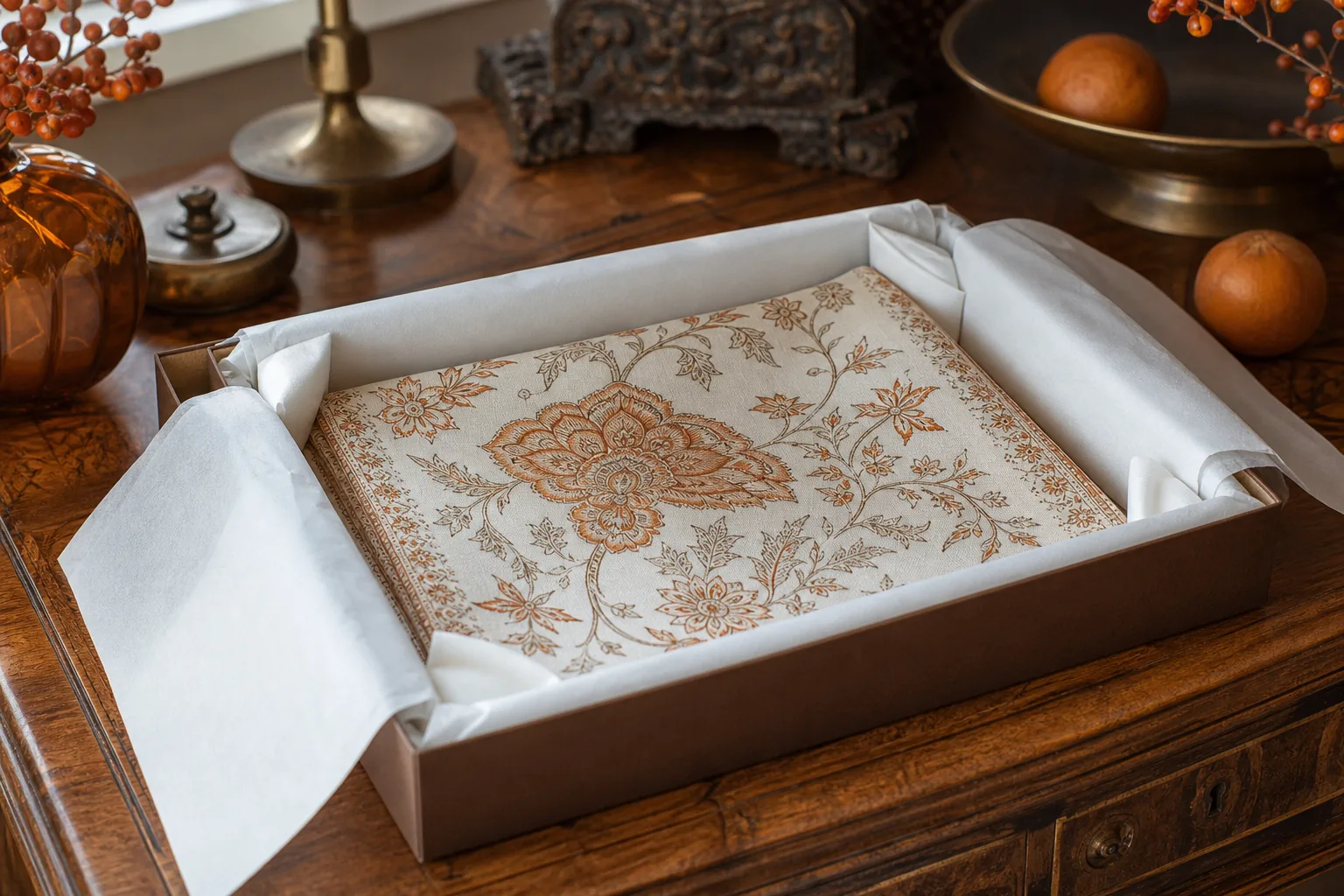
Choose a clean drawer or a large acid-free box. A box should give the linen room to rest without forcing tight folds. Line the base with acid-free tissue, white cotton cloth, or another clean barrier that will not shed color.
Lay the linen flat. Fold it along existing seam lines when possible. If there are no useful seams, make the fewest folds that fit the storage space. Place acid-free tissue inside each fold. For a larger tablecloth, roll loose tissue into a soft tube and place it along the fold before closing the cloth.
Padding matters because the same crease can sit in one place for months. Padding gathered areas and avoiding heavy items on folded textiles can help prevent sharp folds that are hard to remove.
Build a safe folded stack
- Place the heaviest linen at the bottom only if it has a broad, even fold.
- Put tissue between separate pieces so printed surfaces do not rub together.
- Keep the stack low enough that the bottom cloth is not crushed.
- Leave a little space around the stack so you can remove one piece without dragging others.
- Label the box with the contents and date of the last inspection.
Do not iron a sharp crease into place just before storage. Pressing may make the fold more permanent. If the fabric needs smoothing, use the care directions for that piece, then let it cool and dry before folding.
For Pilardi textiles, I prefer a loose fold inside a breathable drawer when the piece is modest in size. A ghalamkari tablecloth can be used on a dining table, as a runner, or as a decorative layer. Its storage method should match how often you handle it. A cloth used each month needs easy access. A piece kept for seasonal meals needs stronger dust protection.
Folded storage is the right choice when space is limited and the cloth can sit flat without pressure. If the linen is large, thin, heavily decorated, or already marked by old folds, move to a roll instead.
Step 3: Roll Large or Fragile Linens Around a Support Tube
Rolling spreads pressure across a wider area, so it often suits large or delicate table linens. Use a clean archival support tube and roll slowly, with no tight pull.
Do not use a PVC tube. It can expose textiles to harmful chemicals over time. A safe support should be archival, acid free, or covered with a clean barrier that keeps the linen away from the tube surface.
First, cover the tube with washed cotton sheeting or muslin. Let the fabric extend past both ends. Place a muslin leader on the tube, then align one edge of the linen with the leader. Roll the cloth in a straight line. Keep the width even as you go.
Never crease the textile to make it fit. If the tablecloth is wider than the tube, adjust the alignment instead of forcing a diagonal fold. A second person can hold the free edge while you roll. That small bit of help prevents drag and skew.
Keep the roll loose and supported
- Roll with the printed side facing inward only when the fabric and finish allow it.
- Keep the roll loose enough that the cloth does not buckle.
- Cover the finished roll with washed muslin or cotton sheeting.
- Store it flat on a shelf that supports its full length.
- Do not place another roll or box on top of it.
Use cloth-covered tubes for fragile fabrics, and avoid tight rolling because it can cause creases that split weak material. Check the roll at set intervals. A muslin cover should be washed every six to 12 months when the textile stays in long-term storage.
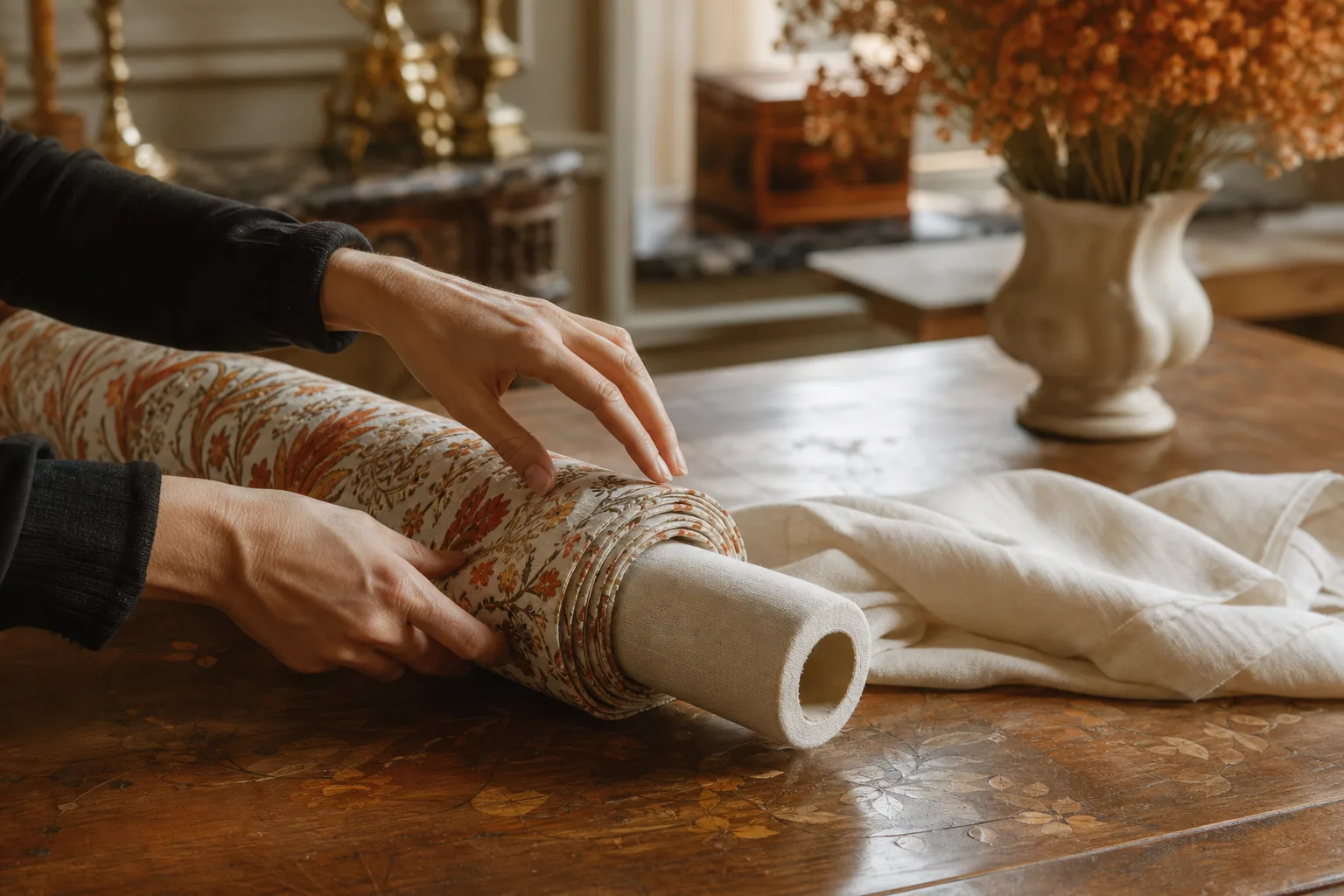
Rolling works well for a large Pilardi ghalamkari textile because it avoids one narrow fold running across the same printed area. Still, the tube must be long enough to support the cloth. A short tube creates unsupported ends that may sag or curl.
Check the roll before you return it to storage. Look for a ridge, a twist, or a spot where the fabric has slipped. If you find one, unroll the piece on a clean surface and begin again. Never tug at a jammed edge.
Step 4: Choose a Cool, Dry, Dark Storage Environment
The right storage method will fail in a damp, bright, or hot room. For table linens, choose a clean space with stable conditions and little direct light.
Aim for a temperature of 65 to 70°F, or 18 to 21°C, with relative humidity between 40% and 50%. A simple check can show whether a closet or cabinet stays within that range. You do not need a special vault. You do need to know what the room is doing.
Keep textiles away from windows, radiators, vents that blow hot air, and exterior walls that collect condensation. Sunlight can fade printed color. Heat can make creases more fixed. Damp air supports mildew and weakens fibers over time.
Choose a drawer, cupboard, or closed shelf that stays dry. Metal shelving with a clean felt cushion works well. If you use wood, keep the textile from touching it. Wood can transfer acids into fabric, especially over long periods.
Breathable storage is safer than a sealed bag for long-term care. Muslin or clean white cotton keeps dust off while allowing air movement. If you use any plastic outer container, leave ventilation and inspect the cloth often. Do not seal a textile inside airtight plastic while there is any chance of trapped moisture.
This point feels backward. Collectors often seal valuable pieces to keep out dust. But condensation inside a sealed container can do more harm than ordinary room air. Dust protection needs airflow too.
Keep the storage area clean, but do not spray fragrance or pest products near the textiles. Strong chemicals can leave residue. Regular inspection is the better habit. Open the drawer every few months and look for dampness, fading, insects, or a musty smell.
I use the same care mindset when arranging Pilardi's one-of-one pieces in a home. The hand-printed tablecloths are made by artisans in Isfahan, then curated and shipped from Paris. Their place in a collection may change, but the storage rules stay plain: protect the fibers from pressure, light, dust, and moisture.
For more context on using these textiles between storage periods, see this care guide. Laundering and ironing instructions can differ by piece. Follow the product page for the cloth you own.
When the room is humid, improve the room before buying more storage supplies. Move the textiles higher off the floor. Increase air movement. Fix a leak or condensation problem first.
FAQ: Storing Table Linens
How should I store table linens long term?
Store table linens clean and fully dry in a cool, dark room with a breathable barrier. Fold smaller pieces with acid-free tissue inside each fold. Roll large or fragile pieces around a cloth-covered archival tube. Keep the textile away from direct light, wood, PVC, heavy weight, and airtight plastic.
Is it better to fold or roll tablecloths?
Rolling is usually better for large or fragile tablecloths because it spreads pressure across the fabric. Folding can work for smaller or durable linens when you pad each fold. Avoid tight squares and sharp creases. Choose the method that lets the cloth rest without compression or repeated handling.
Can I store table linens in plastic bags?
You can use plastic only with care, but airtight plastic is a poor choice for long-term textile storage. Trapped moisture can condense inside and support mildew. Wrap the linen in washed muslin or clean cotton first. Use a ventilated outer container and inspect it from time to time.
What temperature and humidity are best for linen storage?
Aim for 65 to 70°F, or 18 to 21°C, with relative humidity near 40% to 50%. Stable conditions matter as much as the exact reading. Keep linens away from heat sources and damp walls.
Should I iron table linens before storing them?
Iron only according to the care instructions for that textile, and never store a damp cloth. Avoid pressing a sharp fold into place before long storage. For Pilardi's printed cotton textiles, iron on the reverse when needed. Do not bleach, and let the cloth cool and dry before folding.
Conclusion
For most valuable table linens, I recommend a loose roll on a safe, cloth-covered tube. Use a padded fold when the piece is small and easy to support. Before you put anything away, keep the room cool and dry and inspect the cloth for moisture. For additional ideas, see this guide.


