
Guides
Best Unique Gifts for Men Who Have Everything

Shopping for a man who buys what he wants is hard. I find the answer is rarely another gadget. The strongest gifts carry a point of view, such as a handcrafted khatam-kari chess board that brings strategy and style into the same room.
Use the steps below to choose a rare object that fits his habits, his home, and the way he likes to spend time.
1. Pilardi
For unique gifts for men who have everything, start with an object that has a life beyond the moment it is unwrapped. At Pilardi, I look for pieces that can be played, displayed, gifted, or collected.
Our one-of-one collectible décor is handcrafted by specialist artisans. I curate each piece from Paris, where it is shipped to collectors, design lovers, and interior designers around the world.
The best example is a one-of-one collectible décor piece with intricate geometric patterning. Its surface rewards a close look and gives it a distinct visual presence.
That detail also gives the piece two roles. He can display it as part of the room while appreciating its craftsmanship. A standard décor item may be useful for a space. A one-of-one piece can also hold a place in a collection.
That difference matters when someone already owns the usual gifts. He may have headphones, a smart mug, a projector, or a travel gadget. He may even have a well-stocked office. An object with a clear craft and a distinct visual language has less chance of feeling like a repeat purchase.
Price can make gift research misleading. I judge the object first by its use and making, not by a large number on a product page.
Gift guidance for the hard-to-shop-for man often points toward something useful or something far outside the ordinary. I agree, with one condition: usefulness should not erase character.
Begin with a Pilardi collectible décor piece if he enjoys distinctive objects or rooms where art can be appreciated. If he does not, choose another object in the collection. The goal is a piece he will keep near him, not one that sits untouched in a cupboard.
Step 2: Match the Gift to His Interests and Daily Rituals
Unique gifts for men who have everything work best when they fit a habit he already has. Start by watching what he does without being asked.
Does he make coffee as soon as he wakes? Does he sit at a desk for long stretches? Does he host friends at home? Does he plan weekend trips around the coast, a trail, or a game?
Write down the ritual before you shop. This simple act cuts through the noise. A man who loves coffee may enjoy coffee-making equipment, yet a collector may care more about the object beside the coffee than the machine itself.
For a desk ritual, look at the space around his hands. Is the desk bare? Is there a pen loose beside his notebook? Does he keep small items in a drawer because he dislikes visual clutter?
A collectible desk object can answer those clues. Pilardi's Hand-Painted Desk Pen Stand fits a workspace where writing is part of the day. Its role is clear, but it also gives the desk a small point of focus.
For a host, think about the table rather than the bar shelf. A hand-printed textile can bring pattern to a meal without asking him to change his whole room. A hand-printed textile has the feel of a human-made pattern rather than a flat digital repeat.
For someone who likes movement, ask what kind of movement he enjoys. Fitness gifts can include a foam roller, a pull-up bar, a yoga mat, or a smart tape measure for home projects. Outdoor gifts can include a portable speaker, an inflatable lounge chair, or gear for a beach or camping day.
Personal care takes the same care. An electric razor may suit a man who shaves his head. A dental cleaning pod may suit someone with a retainer. These gifts solve a known task, but they are poor choices if you have never seen him use that kind of item.
Problem-solving gifts follow the same principle. A good choice removes a small point of friction from a routine he already values.
Ask one quiet question if you need more information. “What do you reach for most during the day?” His answer may give you more than a search for rare gifts ever will.
Step 3: Choose a Gift He Can Play, Display, or Collect
The best unique gifts for men who have everything can move between use and display. Decide which role should lead before you choose the object.
A gift made to play should invite action. A strategy game works well when he enjoys competition or hosts guests. The game gives the object a reason to leave its case. It also gives the giver a natural way to share time with him.
A gift made to display should hold the room even when nobody touches it. A framed wall piece can work in an entry, study, or bedroom. A decorative tray can sit on a console or coffee table. A painted ceramic coaster can bring a small motif to a desk or side table.
A gift made to collect needs a detail worth returning to. Khatam marquetry gives that kind of detail through its repeated geometry. Hand-painted miniature scenes create a different experience. The eye moves through the image rather than across a repeating surface.
Consider how the object behaves when guests arrive. A board can become the center of a game. A storage piece can prompt a question about its pattern. A mirror can catch light from across the room. These moments matter more than a long list of features.
At Pilardi, every piece is one-of-one. That means the choice should feel personal without pretending you can predict his whole taste. Look for one strong clue, then let the craft do some of the work.
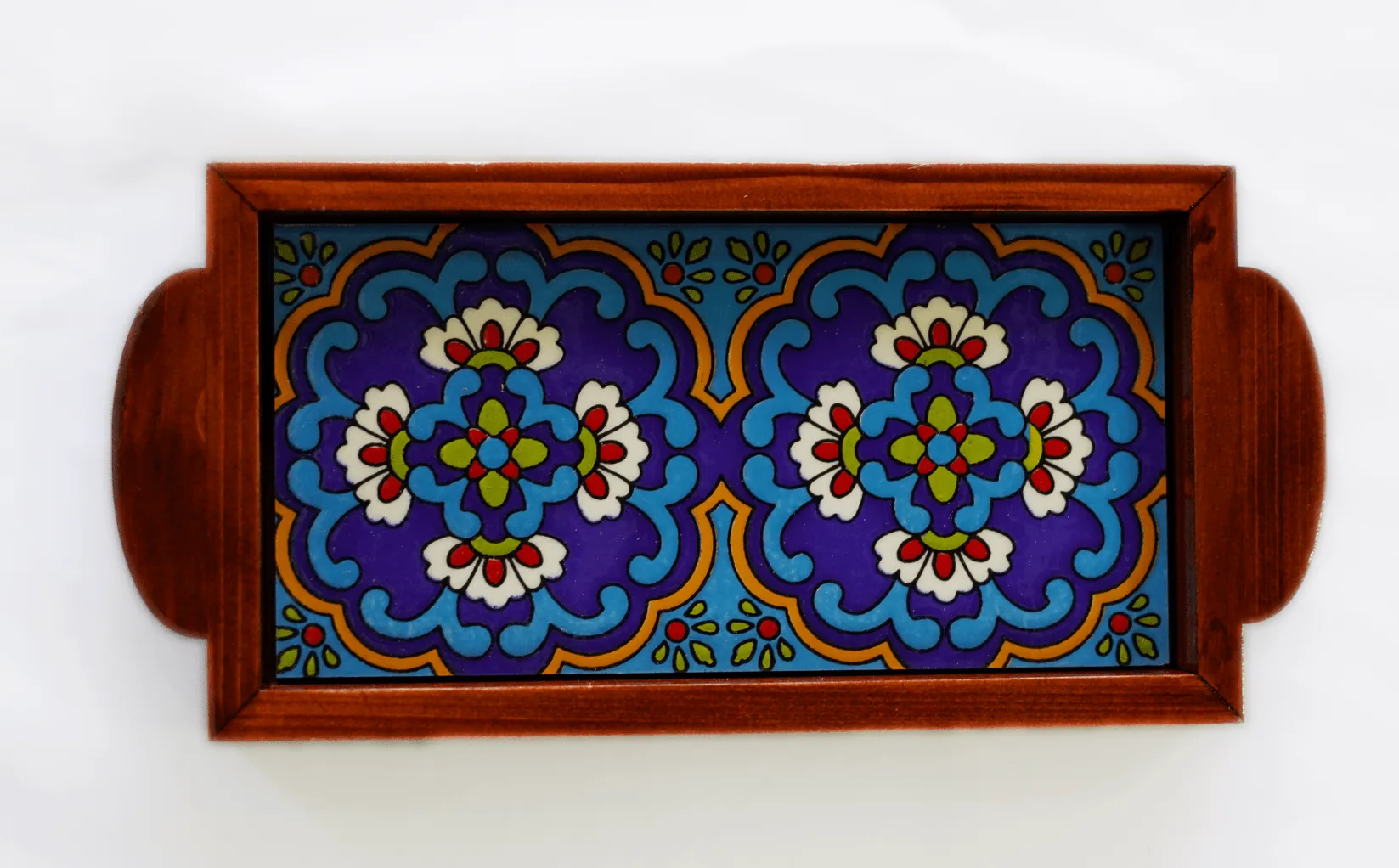
Do not assume a collector wants the largest object. He may prefer a compact piece that can sit close to his desk. A design lover may want a mirror with a strong frame. An interior designer may need a piece that can work in a carefully planned scheme.
Novelty gifts can work too, but only when the joke has a place in his life. A playful drinkware item, a compact game, or a whimsical desk object suits someone who likes play at work. The same gift may feel careless in a quiet study.
Experience gifts follow this rule in another form. An event, a class, an outing, or a wellness appointment creates a memory instead of adding an object. You can also pair an experience with a small keepsake, such as a keepsake for the ticket or note.
Choose the main role first. Then ask where the gift will live when the game ends, the guests leave, or the experience is over.
Step 4: Select the Right Scale, Color, and Setting
For unique gifts for men who have everything, fit matters as much as rarity. A beautiful object can feel wrong when its scale or color fights the room.
Start with a rough measure. Look at the wall, shelf, desk, or table where you expect the gift to go. Take a photo beside a common object, such as a book or lamp. You do not need a perfect plan. You need a sense of proportion.
Small pieces are easier to place. A keepsake box can sit on a dresser. A pen stand can share a desk with a notebook. A bracelet can be worn without changing the room at all.
Larger pieces need more care. A wall mirror should have space around it, so its frame can be read. A board should have enough table depth for play. A wide textile needs a surface that lets its pattern show without heavy overlap.
Color comes next. Look at the colors he wears and the colors already in his home. Indigo may suit a room with pale wood and cool walls. Turquoise can pick up a small accent elsewhere. Red, pink, or terracotta may work best when the room has warm light or natural timber.
Do not match every color. One related tone is often enough. The gift should belong in the room while keeping its own voice.
Setting also tells you what kind of object to choose. A study can take a writing accessory or a small khatam box. A dining room can take a patterned tablecloth or a decorative tray. An entry can take a mirror that catches light near the door.
A collector may enjoy a piece that asks for close viewing. An interior designer may need the same piece to read well from across the room. Think about both distances.
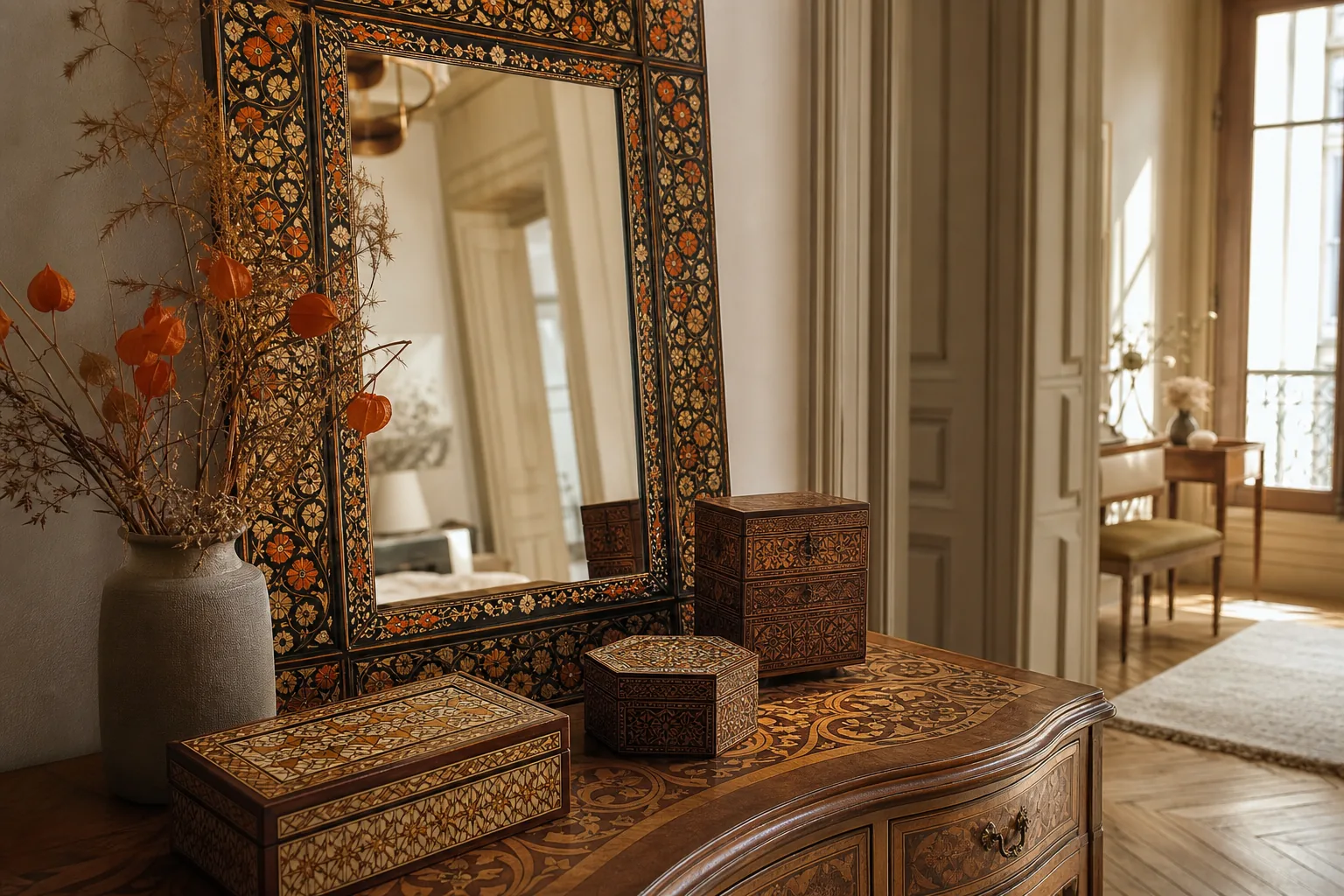
Lighting can change the choice. Glossy surfaces may catch direct glare. A mirror may need angled light rather than a lamp aimed straight at it. The frame should remain clear when the room is bright and when it is quiet at night.
For a deeper placement check, our notes on decorative wall mirror ideas for every room can help you think through wall space and viewing distance.
When you cannot see the room, choose a smaller object with a clear function. A box, tray, bracelet, or desk accessory is less demanding than a large wall piece. If you know his home well, a mirror or textile can make the gift feel more deliberate.
Step 5: Verify Craftsmanship, Provenance, and Usable Care
A rare gift deserves a clear account of how it was made. Before buying, check the craft, the maker's location, the materials, and the care needs.
Begin with the technique. Khatam-kari should be described as marquetry made from fine slivers of wood, brass, and bone arranged into geometric patterns. A hand-printed textile should be described as hand-block printed. Clear language helps you avoid vague claims about “traditional” work.
Then check whether the piece is one-of-one or part of a repeated production run. Those are different buying decisions. A one-of-one object carries a particular surface, color balance, and set of small marks. It should be shown as an individual piece, not as an interchangeable unit.
At Pilardi, pieces are handcrafted by specialist artisans. I curate and ship them from Paris. That path is part of the provenance, and I want the buyer to understand it before the gift reaches his home.
Ask for the facts that affect care. Does the surface need a dry cloth? Should it stay away from strong sun? Can a textile be washed, or should it be spot cleaned? Is a mirror safe to clean with a damp cloth, or should the painted frame stay dry?
Do not use a generic cleaning plan for every material. Brass, wood, paint, textile, glass, and stone respond in different ways. A soft dry cloth is often a safer first move than a strong spray, but follow the care notes supplied with the piece.
The same check applies to a crafted surface used during hands-on activity. Keep food and drinks away from it. Handle any accompanying components by hand rather than dragging them across the inlay. Store the object safely when it is not in use, following any supplied care guidance.
Gift care instructions with the object. A short card can say where it was made, what technique it uses, and how to keep it clean. This turns provenance into part of the gift rather than a detail lost after delivery.
Some gift guides focus on polished surfaces and high prices. I prefer a slower test. Can you name the technique? Can you explain the material? Can you tell him how to care for it? If the answer is yes, the gift has a stronger story.
For a second opinion on an upscale self-care alternative, an experience can work when the recipient prefers experiences over objects. A guide to how long the treatment lasts can help you check the time commitment before pairing that kind of experience with a small keepsake.
Step 6: Build a Gift That Feels Personal Without Guessing
The safest personal gift starts with evidence. Use what you know about his habits, room, or taste. Do not invent a version of him based on a stereotype.
If he writes by hand, choose a desk accessory. If he hosts, choose something that can appear on the table. If he plays strategy games, choose a board that makes play feel worth planning. If he collects objects, choose a piece with a technique he can study.
You can also build a small group around one object. Keep the group restrained. One main piece should lead. A note, a book, or a planned evening can support it without turning the gift into a basket of unrelated goods.
The note matters more than extra packaging. Say why you chose the object in one or two lines. Mention the detail that made you think of him. Avoid a long speech about luxury.
Personalization does not always mean engraving. It can mean choosing a color that echoes his study, or giving a board because you want to play with him. Those choices show attention without changing the object.
When you truly lack a clue, ask someone who shares his home. Ask about space first. “Does he have room for a wall piece?” is better than “What does he like?” The answer will narrow the field without spoiling the surprise.
One useful test is the six-month test. Imagine the gift after the first excitement fades. Will he still use it, display it, or notice its craft? If the answer is no, keep looking.
My own preference is a gift with one clear reason behind it. A Pilardi piece can carry that reason through its craft, its origin, and its place in a daily ritual. You do not need to make the choice loud. You need to make it legible.
FAQ
What are the best unique gifts for men who have everything?
The best choices are one-of-one objects tied to a real interest, such as a handcrafted strategy-game piece, a collectible object, or painted décor. Choose by habit first, then by craft and scale. A rare object works well when he can use it, display it, or return to it as part of a collection.
What can I buy for a man who already owns every gadget?
Choose an object with a human making process instead of another electronic device. A handcrafted game piece, painted desk accessory, decorative tray, or artisan textile gives him something a gadget cannot. If he dislikes added décor, choose a compact object or plan an experience around a keepsake.
Is a handcrafted strategy-game piece a good gift for someone who has everything?
A handcrafted strategy-game piece is a strong gift when he enjoys strategy, design, or collecting. It has a clear use during a game and can remain on display between games. Look at the table space first. Then check the materials, craft, care notes, and whether the piece is one-of-one.
How do I choose a gift for a man whose taste is hard to read?
Choose from his daily rituals rather than guessing his style. Watch where he spends time and what he handles often. A desk object suits someone who writes. A tray suits someone who hosts. A compact object or bracelet suits someone who prefers gifts that take up little space.
What makes a gift feel personal without engraving?
A gift feels personal when the choice connects to a known detail about him. Pick a motif linked to his interests, a color that fits his room, or an object you can use together. Add a short note that explains the choice. That often feels more sincere than putting his name on a generic item.
How should I care for handcrafted Persian décor?
Care depends on the materials and finish, so follow the piece's own care guidance. Start gently with a soft dry cloth. Keep painted surfaces away from harsh cleaners and strong direct sun unless the maker says otherwise. Treat textiles, wood, brass, glass, and mirrors as separate materials rather than using one cleaning method for all.
Conclusion
Choose the gift with the clearest link to his real life, then check its scale and care needs before you buy. For a man who enjoys strategy and design, I would begin with a one-of-one Pilardi khatam-kari chess and backgammon set. If that does not fit his habits, browse smaller desk, textile, mirror, or box pieces and let one precise detail guide your choice.


