
Guides
How to Choose and Style a Block Print Tablecloth

A tiny shift in a printed motif can tell you more than a perfect repeat ever will. That small irregularity is often the mark of a hand-block printed textile. I’m Anahita, founder of Pilardi, and I’ll show you how to choose the right cloth, read its pattern, style it at home, and care for it well.
Step 1: Choose the Right Block Print Tablecloth
Start with the table, then choose the block print tablecloth. Measure the top from end to end and side to side. For a comfortable drop, add about 40 to 60 cm to both measurements. On a round table, add about 40 cm to the diameter for a modest overhang.
Think about how you’ll use the cloth. A small square suits a side table, breakfast setting, or compact dining table. A larger rectangular cloth gives a long table more presence. Pilardi’s Block Printed Cotton Tablecloth, Monochrome Floral measures 206 × 136 cm, while other Pilardi tablecloths are made in square or round formats.
For the fabric, cotton is the soundest choice for regular table use. For tablecloths, a medium thread count cotton, around 180 to 250, strikes the right balance between durability and a soft drape. Higher thread counts are better suited to bedding.
Next, ask three plain questions before you buy:
- Has the cloth been pre-washed after printing?
- What fiber is it made from?
- How should it be washed and dried?
Pre-washing matters because it suggests that the dyes have gone through a fixing process. If the seller cannot answer basic care questions, pause before buying. Care details are part of the object’s provenance.
Step 2: Understand How the Block Print Is Made
A genuine block print tablecloth is made one impression at a time. A craftsperson carves a design into a wooden block, applies pigment to its raised surface, then presses it onto the cloth. The block is lifted, moved by hand, and pressed again.
Ghalamkari is the Persian name for hand-block printed textile work. At Pilardi, specialist artisans use this tradition for Persian cotton textiles. A floral or paisley repeat may need more than one block. One block can carry the main flower. Another can add leaves, stems, or border details.
The pattern is built in layers. That is why the cloth can look almost hand-painted. Pressure changes from one impression to the next. Pigment may appear deeper in one spot and softer in another. A join may sit slightly off line.
Those marks are useful when you’re judging authenticity. The method transfers an image from a carved surface onto another material. In textile work, the hand placement of that surface leaves a visible trace.
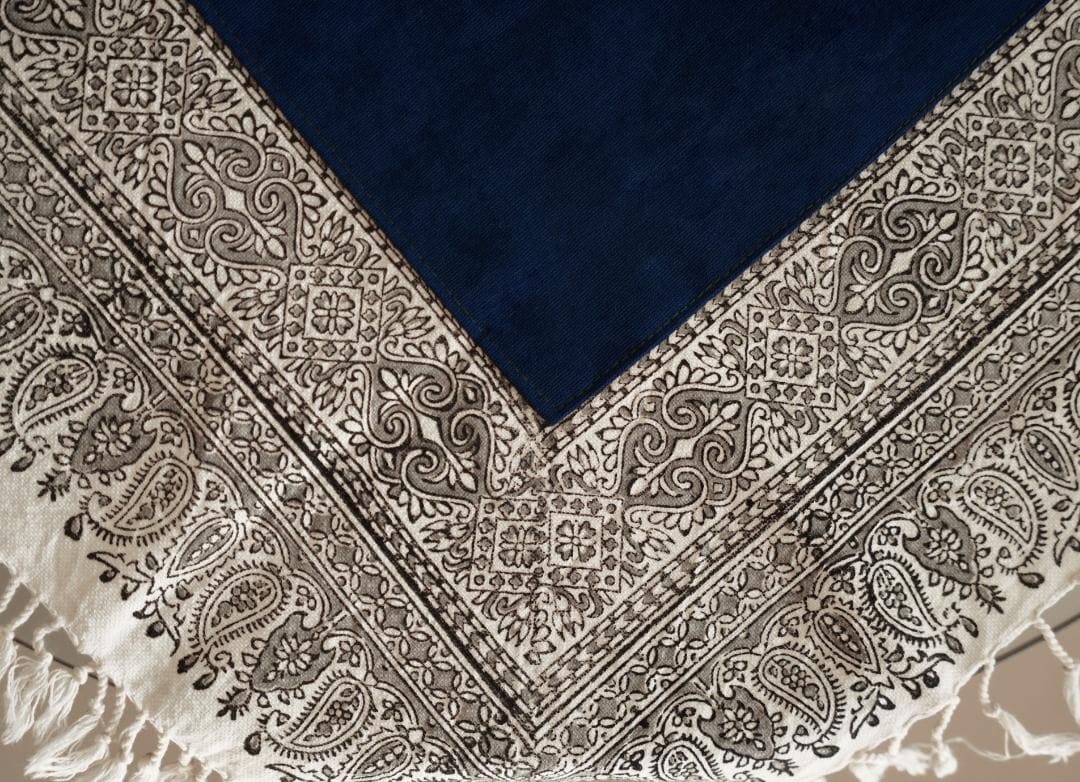
Look closely at the edges of the motifs. Hand printing may show softened outlines, faint joins, or small gaps in color. A perfectly repeated pattern is not proof of machine printing by itself, but pixel-level sameness should make you ask more questions.
In my view, the best test is to inspect the cloth under good light. You should see a pattern with rhythm, not sterile sameness. Every Pilardi piece is one-of-one, handcrafted by specialist artisans, then curated and shipped from Paris. The variations are part of that record of the hand.
Step 3: Style a Block Print Tablecloth on the Dining Table
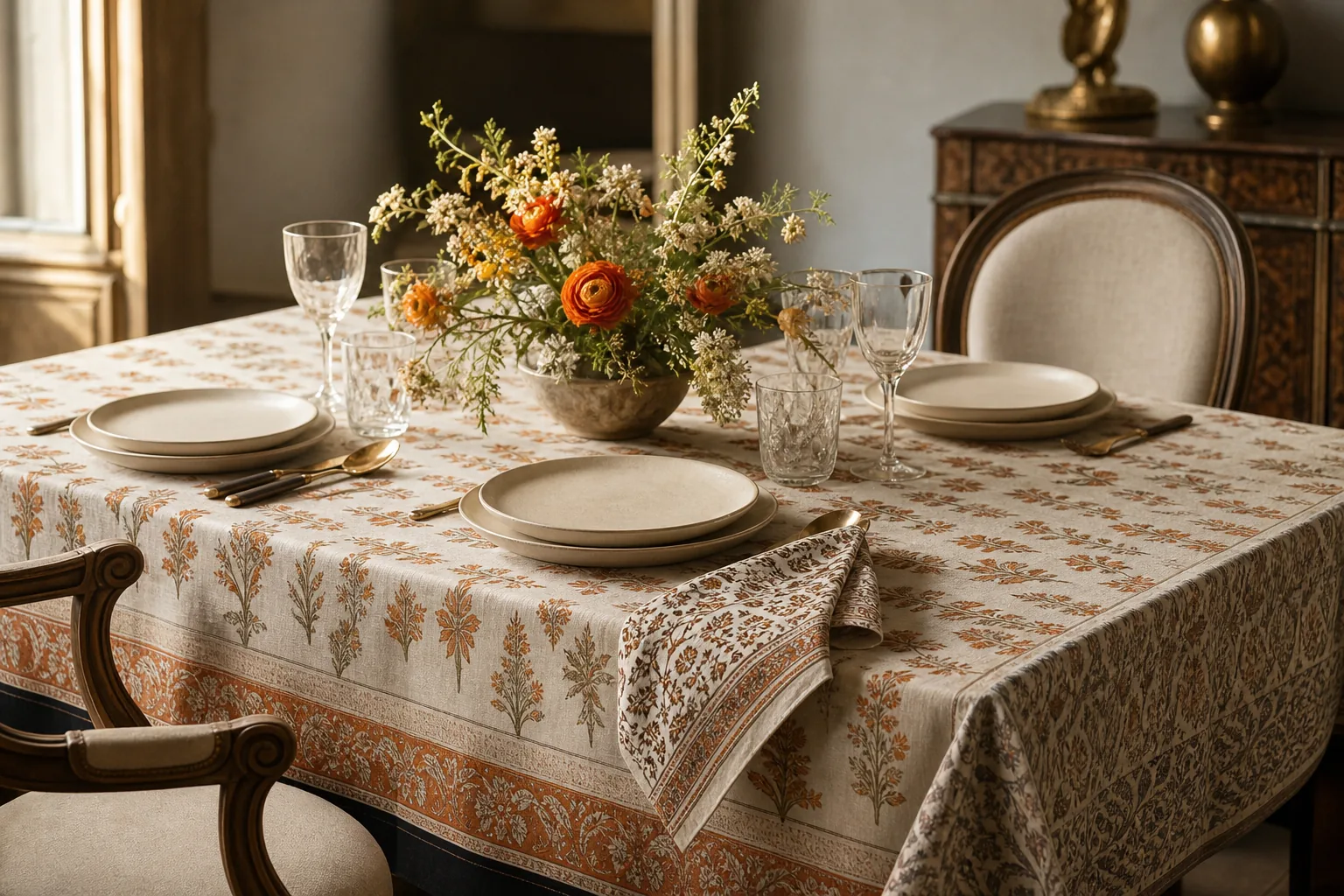
Let the block print tablecloth set the color direction for the room. If the cloth has a busy floral or paisley design, use plain dinnerware so the pattern can breathe. White, cream, wood, or softly colored ceramics work well with a strong print.
For a quieter table, keep the plates simple and repeat one color from the cloth in the napkins. With Pilardi’s indigo tablecloth, for example, you might use pale ceramics and natural wood. With a warmer print, terracotta or muted rose can pick up the same mood without copying the pattern.
Texture adds depth, but too much texture makes the table feel crowded. Add one woven charger or a small ceramic piece. Glass can bring a clean contrast to a cotton surface. A wooden bowl keeps the setting relaxed.
Build the centerpiece low enough for conversation. A shallow bowl of seasonal fruit works for a daily meal. A low floral arrangement suits a dinner. Candles can add warmth, but keep their form plain when the cloth already has strong detail.
Seasonal styling can stay simple:
- In spring, use pale flowers and light ceramic plates.
- In summer, pair the cloth with clear glass and fresh fruit.
- In autumn, add earthy tones and a wooden serving bowl.
- In winter, use warm napkins and a restrained candle arrangement.
Mixing patterns is possible. Keep one pattern large and the other small. A floral tablecloth can sit beside a narrow striped napkin, but two equally bold prints will compete. I prefer one clear focal point and a few quiet supporting pieces.
For a more layered room, you can place a small collectible object nearby rather than on the eating surface. My approach to styling Persian décor with intention is to give each crafted object enough space to be seen. The same rule works here. A tablecloth needs room around it.
Step 4: Wash, Dry, Iron, and Store It Properly
Care for a block print tablecloth with cool water, mild soap, and low friction. Before the first wash, test a hidden corner with a damp white cloth. This shows whether excess dye may transfer.
For the first wash, separate dark and light textiles. Hand washing is the gentlest option. If the care label allows a machine, use a cold or delicate cycle with low spin. Do not scrub, twist, or wring the cloth. Press out water instead.
A mild detergent is enough. Avoid bleach, harsh chemicals, and optical brighteners. Hot water can speed up fading and may cause shrinkage. If you’re unsure about the dye, ask the seller before washing rather than testing the whole piece.
Dry the cloth in shade with good airflow. Direct sun can fade wet fabric. A tumble dryer adds heat and movement, so air drying is the safer choice. While the cloth is damp, smooth the edges and reshape it. This helps the final drape stay even.
Iron on the reverse side with moderate heat. For a dark or heavily printed area, place a thin cotton pressing cloth between the iron and the textile. Avoid pressing directly over the print at high heat.
Printing applies color to fabric in a controlled design. Gentle care helps keep that design clear after repeated use.
Treat stains early with cool water and a little mild soap. Blot rather than rub. If food oil has soaked in, do not reach for bleach. Ask the maker for the safest treatment, especially when the cloth has a dark indigo or red print.
Before storage, wash and dry the tablecloth fully. Fold it loosely inside a breathable cotton bag or wrap it in acid-free tissue. Plastic can trap moisture. If the cloth will stay stored for many months, refold it from time to time so the same crease does not become permanent.
Step 5: Make Your Own Block Print Tablecloth
Making a block print tablecloth at home is possible, but start with a small test cloth. Cotton or linen with a smooth surface gives a clearer print than heavily textured fabric.
Prepare the work area
Cover a sturdy, flat table. Put a layer of scrap paper or cardboard beneath the fabric because ink can pass through. Smooth the cloth so it cannot shift during printing.
Carve or choose the block
Draw a simple shape on a carving block. Remember that the printed image will be reversed. This matters for letters, numbers, and any design with a clear direction.
Carve away from your body. Start with the main outline and leave fine details until later. Removed areas become negative space. You can keep some carved texture if you want a less polished mark.
Test the ink
Use fabric block-printing ink. Roll a thin layer onto a glass plate with a brayer. The ink should have a light, even texture. If it looks thick or gloppy, remove some ink before touching the block.
Press the inked block onto a scrap of the same fabric. Apply even pressure across the whole block. Lift one corner first, then remove it. Check the print before you begin the tablecloth.
Build the repeat
Mark a light guide on the fabric if you need straight rows. Stamp the first motif, then move the block by eye or follow your guide. Do not chase perfect alignment. Small shifts are part of the hand-printed look.
For a richer design, use separate blocks for the main shape and smaller details. Let each color dry as directed by the ink maker before adding another layer. Keep the cloth flat and undisturbed while it dries.
Wash the blocks soon after use. Mild dish soap and a soft brush can remove fresh ink. Let the finished fabric cure for the time stated on the ink label before laundering it.
DIY printing teaches you why artisan cloth takes care. Each impression asks for a decision about pressure, spacing, and color. If you would rather live with a finished Persian textile, Pilardi’s hand-printed pieces are made by specialist artisans and selected in Paris for collectors, design lovers, and interior designers.
FAQ
What is a block print tablecloth?
A block print tablecloth is a textile decorated by pressing an inked, carved block onto fabric by hand. The design is built through repeated impressions, sometimes with several blocks for different colors or details. Small shifts in alignment and color depth are normal. They show that the pattern was placed by hand rather than copied as a perfect digital repeat.
How can you tell if a tablecloth is hand block printed?
You can often spot hand printing by looking for slight changes in the pattern repeat. Motifs may sit a little off line, while some edges look softer or lighter. Ask if the cloth was pre-washed after dyeing. A seller who can explain the fabric, dye process, and care method gives you a clearer record of the piece.
What fabric is best for a block print tablecloth?
Cotton is usually the best choice for a block print tablecloth because it has a soft drape and suits regular table use. A medium thread count around 180 to 250 can balance strength with flexibility. Linen can also print well when it has a smooth surface, but always follow the maker’s care instructions for the exact cloth.
How do you wash a block print tablecloth?
Wash a block print tablecloth in cool water with mild detergent. Hand washing is the gentlest method, while a cold delicate machine cycle may suit some pieces. Wash dark colors apart at first. Do not bleach, scrub, twist, or wring. Dry the cloth in shade, then iron it on the reverse side with moderate heat.
How much overhang should a tablecloth have?
A tablecloth usually needs about 40 to 60 cm added to both the length and width of the table for a comfortable drop. For a round table, adding about 40 cm to the diameter gives a modest overhang. The best choice depends on the table’s height, the formality of the setting, and how much fabric you want at each edge.
Can I use a Persian tablecloth every day?
Yes, you can use a Persian tablecloth every day if you accept that hand printing will show small changes in color and alignment. Use gentle washing methods and treat stains early. For more context, Persian tablecloths and their everyday use are best understood as both useful linens and textile objects.
Choose a cloth that fits your table, shows the quiet marks of hand work, and comes with clear care guidance. If you want a one-of-one Persian textile, explore Pilardi’s hand-printed cotton tablecloths, then measure your table before making the final choice.


